
What it does
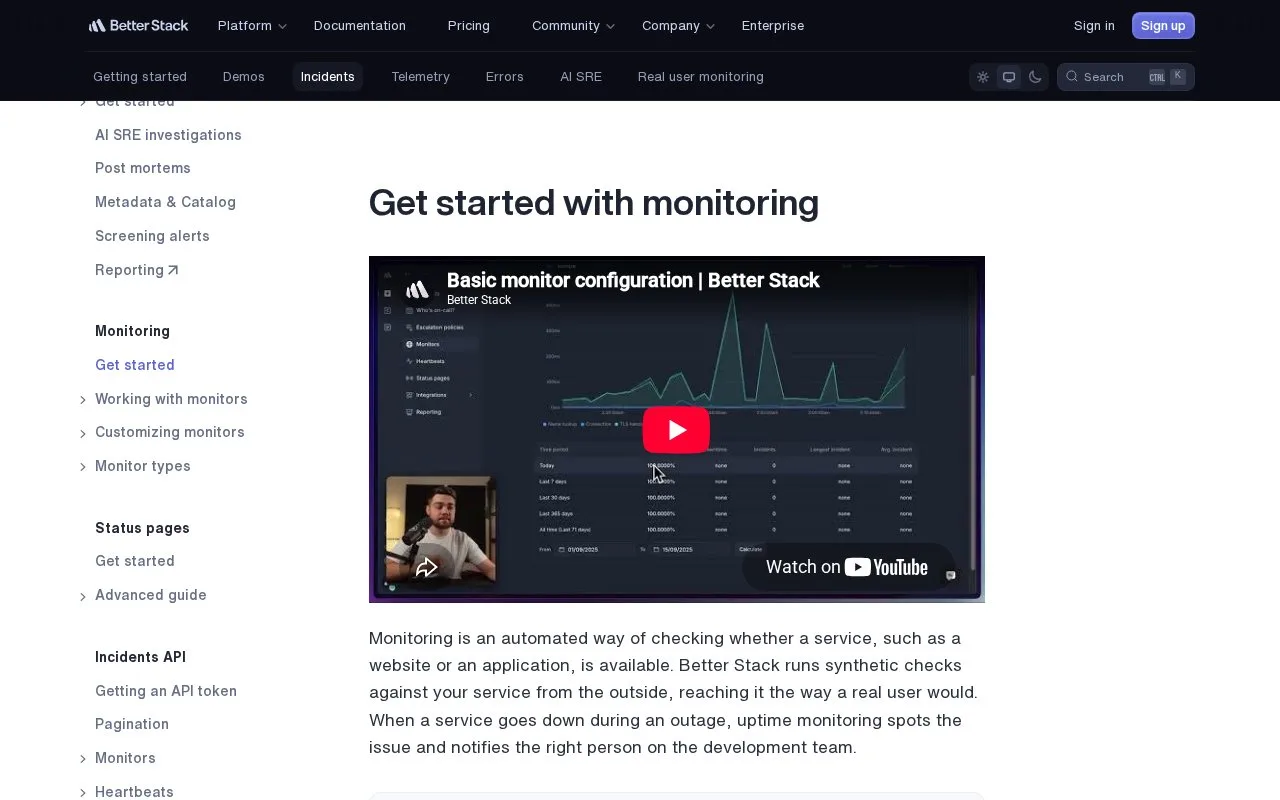
Better Stack Uptime runs synthetic checks against a URL and reports when the response indicates an outage. Its getting-started guide begins with an HTTP status-code monitor and basic alerting. This is useful for detecting that a service is unavailable from an external viewpoint; deeper logs and traces are separate signals used to diagnose why it failed.
Start with a public URL whose availability matters to users. The official guide’s first monitor follows this sequence:
- Add an HTTP status-code monitor for the URL.
- Treat a successful 2xx response as healthy.
- Configure alerting so the team hears about a failed check.
This is a synthetic check: Better Stack reaches the service from outside rather than reading application logs or metrics. It can detect that the endpoint stopped responding as expected, but it cannot identify the faulty dependency by itself. Use traces, logs, or metrics for diagnosis. The pricing page lists a free personal-project tier with up to ten monitors and heartbeats and one status page; verify current limits if a production team needs more coverage or responders.
Strengths
- The guide documents external HTTP status checks and basic alerting.
- The free tier includes monitors, heartbeats, and a status page.
Watch out for
- A failed check detects a reachability or response problem but does not by itself identify the underlying cause.
- The free-tier limits may not fit a larger production monitoring estate.
Best for
- Checking availability of a public website or API endpoint
- Sending an alert when a service no longer returns a successful HTTP status
Sources
- Get started with monitoring | Better Stack Documentation (Oct 25, 2026)
- Pricing | Better Stack (Oct 25, 2026)