
What it does
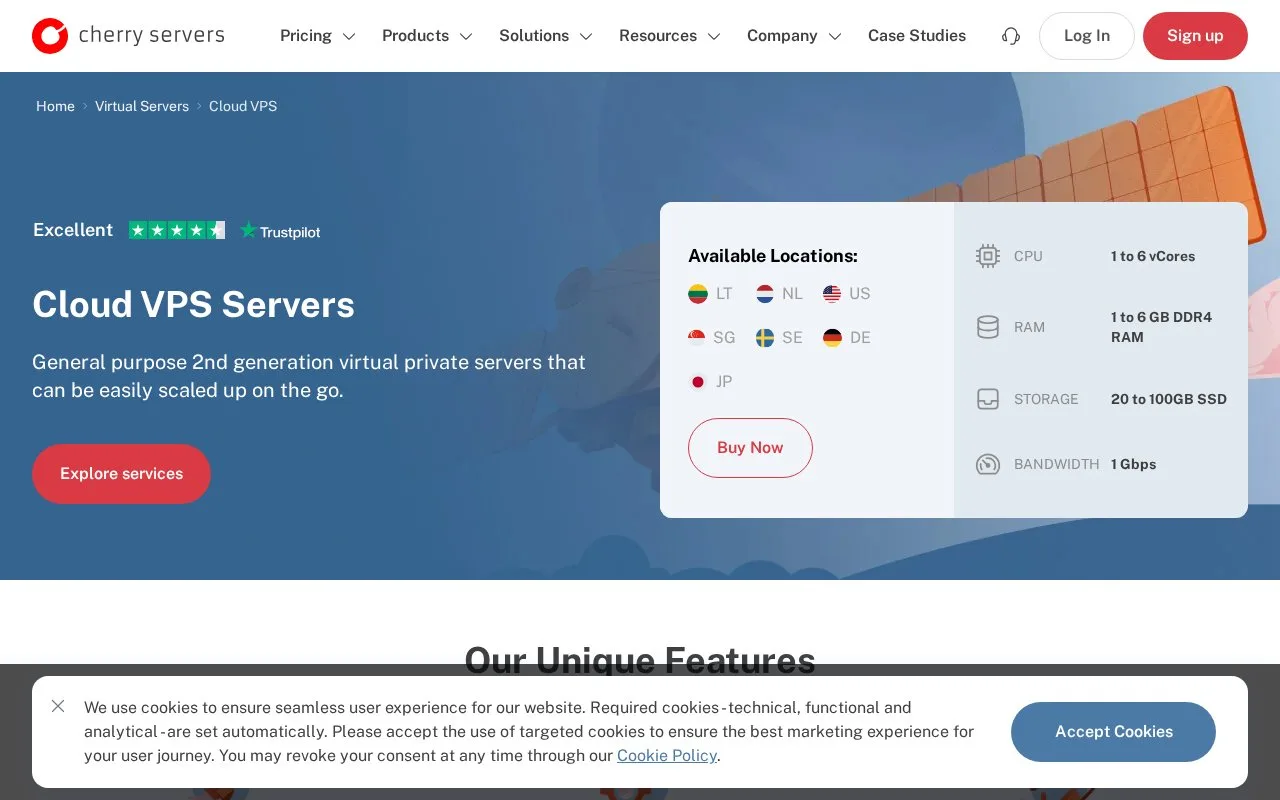
Cherry Servers Cloud VPS is a virtual-machine product for smaller workloads that need an operating-system environment of their own. It offers pre-sized shared-resource plans, including a Gen 2 line, and can be managed through the client portal, CLI, or REST API. The product is a fit when a developer wants control over a server for a staging site or a modest service, rather than a platform that builds an application directly from a repository.
Start with the workload and location
The Cherry Servers documentation positions Cloud VPS for lighter workloads and distinguishes its shared-resource plans from VDS products with dedicated resources. A sensible first task is to choose an operating-system image and region, then select a plan with enough memory and disk for the service. The vendor documents ordering through its client portal or API, with CLI automation also available. Once provisioned, connect using SSH or the remote VNC console. Cloud-init can supply first-boot configuration when provisioning through the API. These are documented options, not a server created for this listing.
Plan for shared capacity
The product page describes Cloud VPS for small sites, simple APIs, bots, and microservices. It also exposes hourly, monthly, and annual billing choices, so a short-lived development box need not be treated as a permanent monthly server. Check the chosen plan and location before estimating cost; the opened pricing page shows that billing cycles and available capacity vary by plan and region. A Cloud VPS shares physical host resources, so teams that need dedicated compute should compare the provider's separate VDS products. The customer still chooses and maintains the guest OS and application stack.
Strengths
- KVM-based virtual servers have preconfigured CPU, memory, and storage plans for small development and application workloads.
- The provider documents portal, CLI, and REST API management, including cloud-init for first-boot setup.
- Hourly billing is available alongside monthly and annual options.
Watch out for
- Cloud VPS uses shared host resources, so it is not the dedicated-resource VDS offering.
- The customer must configure and maintain the guest operating system and application rather than relying on a source-to-deployment PaaS.
Best for
- Staging environments and low-traffic sites that need a small Linux server
- Simple APIs, bots, and microservices with modest compute needs
- Automating short-lived test servers with the Cherry Servers API or CLI
Sources
- Cloud VPS Servers from $3.51/mo deployed in 5 minutes | Cherry Servers (Oct 25, 2026)
- Cloud VPS | Product docs | Cherry Servers (Oct 25, 2026)
- Virtual Server CLOUD VPS 1 (GEN 2) | Cherry Servers (Oct 25, 2026)