
What it does
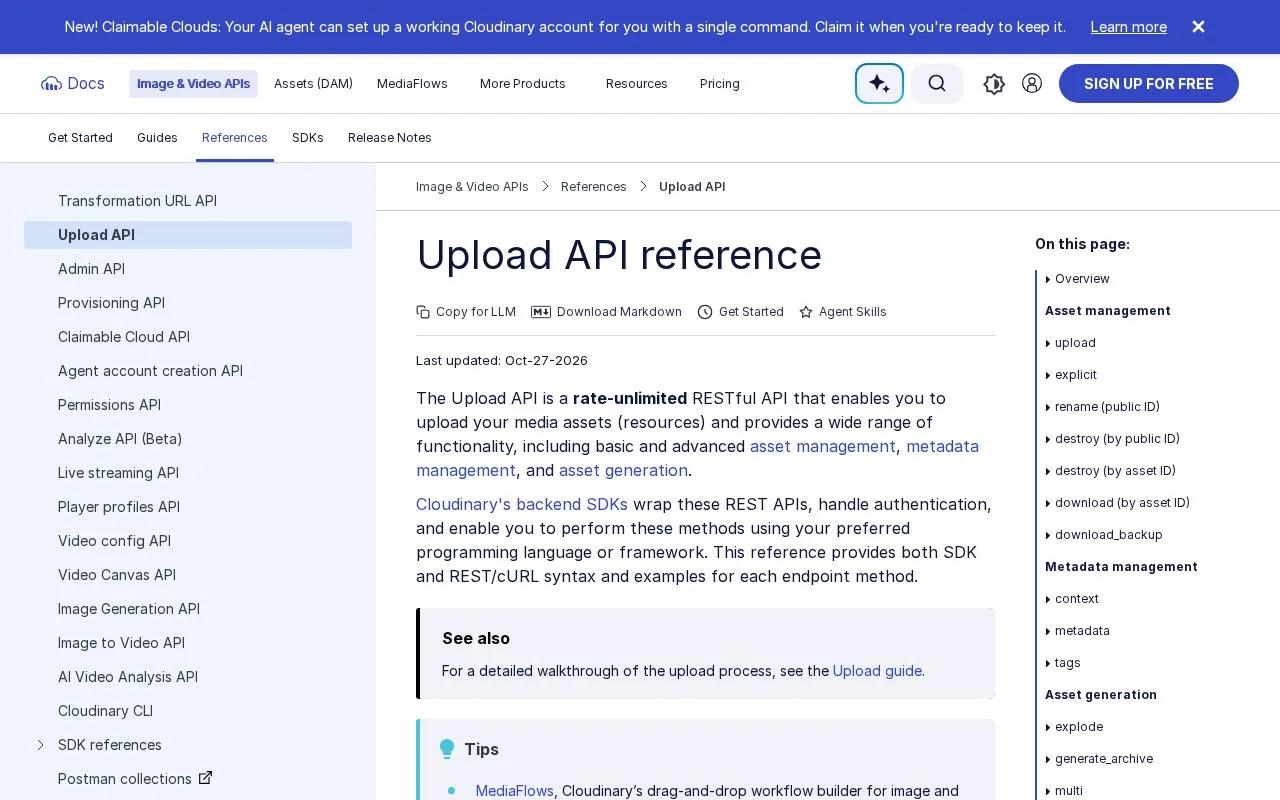
Cloudinary provides media APIs and SDKs for uploading and managing images and videos, then delivering transformed assets to an application. The upload reference documents programmatic asset submission, while the platform also exposes URL-based transformations and delivery controls. It is a hosted media service, not a client for testing arbitrary third-party APIs.
Start with a small upload from the application that owns the asset. The documentation explains how to register for an account, find credentials, and use an upload endpoint or SDK. Once an asset is stored, the application can request a transformed delivery URL instead of maintaining separate copies for each screen size. Keep the API secret on the server when using signed operations; an unsigned upload preset has different controls and should be configured deliberately.
Cloudinary’s pricing page lists a Free option and paid tiers, so compare its included storage, transformations, and delivery allowances with the actual media workload. A prototype with a few images may fit a free allowance, while a product with video or high traffic should measure asset volume and transformation use before choosing a tier.
Strengths
- The upload API reference documents programmatic image and video uploads.
- The platform provides SDK and URL-based media workflows.
- The pricing page lists a Free tier and paid plans.
Watch out for
- The application must manage account credentials and choose signed or preset-based upload controls appropriately.
- Storage, transformation, and delivery usage can change which plan fits a project.
Best for
- Adding media upload and transformation to a web or mobile product
- Serving optimized images without maintaining multiple derivative files
Sources
- Upload API Reference | Cloudinary Documentation (Oct 25, 2026)
- Cloudinary - Pricing and Plans (Oct 25, 2026)