
What it does
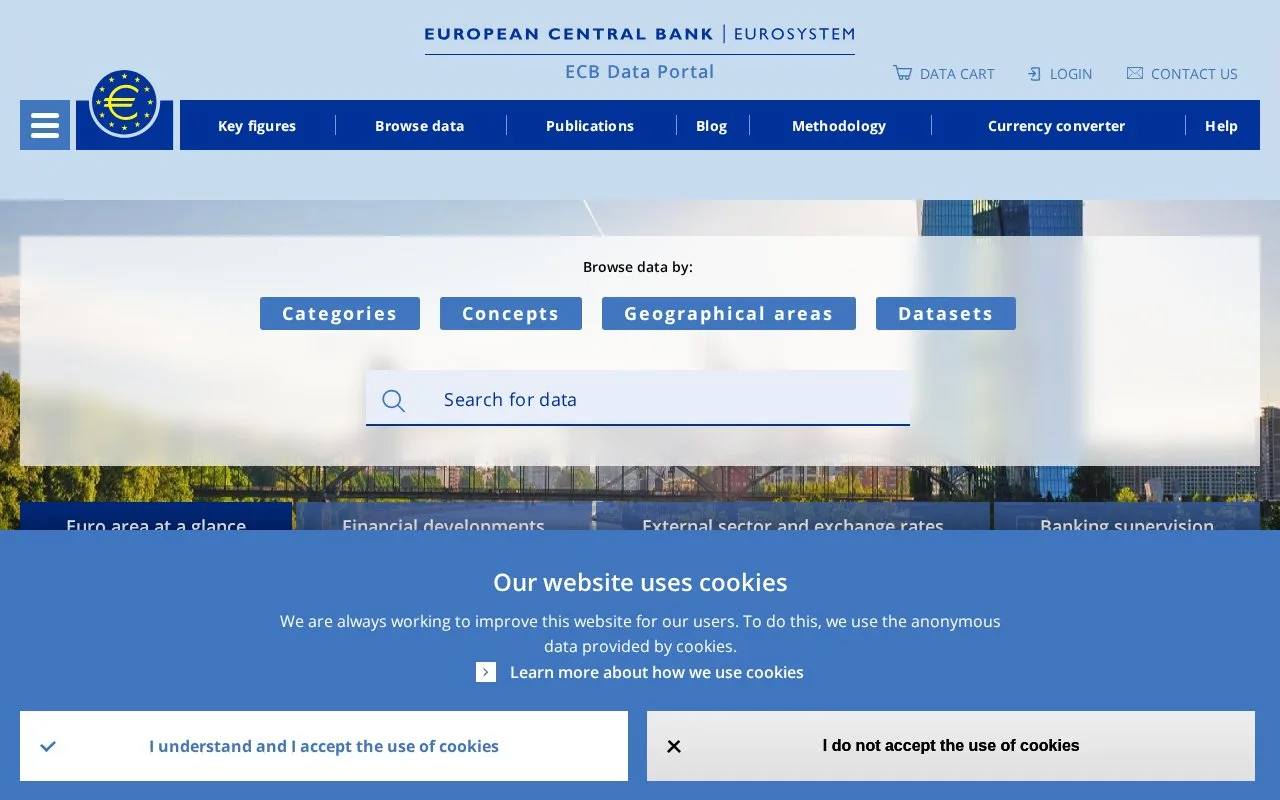
The ECB Data Portal provides official euro-area economic, financial and banking statistics. It combines indicators, dashboards and downloadable series with their definitions. Publicly released ECB statistics have free access, with software access available through a statistical data interface.
The portal's Quick info describes what a headline indicator measures, including geography, adjustment and calculation basis. Read it before adding the series to the data cart. An annual inflation rate, quarterly GDP change and daily reference exchange rate have different frequencies and definitions.
The ECB's topic dashboards cover areas such as inflation, bank interest rates, government finance and payments. Use the dataset metadata to understand the series behind a visual comparison, and retain observation dates when exporting a selection. Statistical calendars show upcoming updates, while series notifications and press-release feeds provide different ways to follow changes.
Publicly released ECB statistics are free to access. The portal provides data downloads, and its Statistical Data and Metadata eXchange interface, usually called the SDMX API, lets software retrieve published datasets. This is useful for a recurring euro-area comparison that needs both numerical observations and their definitions.
Strengths
- Pairs official statistics with detailed dataset metadata
- Offers topic dashboards and downloadable series
- Provides a standard statistical API for repeatable data retrieval
Best for
- Analysts comparing euro-area indicators and country breakdowns
- Users building recurring reports from official ECB statistics
Sources
- Homepage | ECB Data Portal (Oct 25, 2026)
- ECB statistics and free public access (Oct 27, 2026)
- ECB data services, downloads, dashboards and API (Oct 27, 2026)