
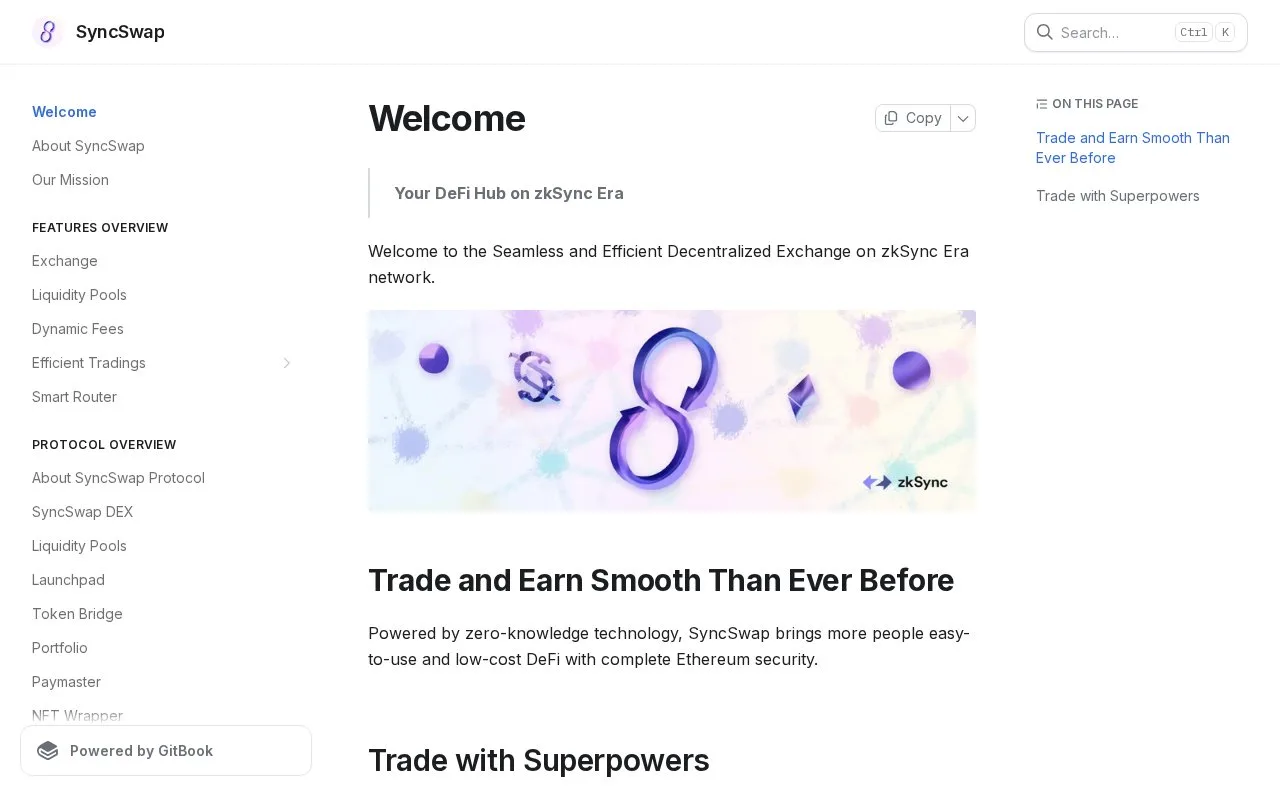
What it does
SyncSwap is a decentralized token exchange on ZKsync with Classic, Stable, Aqua and Range pools. Its router compares pool types, while pool-specific fees and available liquidity affect each swap.
SyncSwap gives a token pair more than one possible pool design. Classic pools cover general volatile assets; Stable pools target assets with closely linked prices. Aqua pools adjust concentrated liquidity automatically, while Range pools let liquidity providers choose price bands. For a swap user, the router combines those choices into a route. For a provider, the pool model changes how the deposited assets participate.
The trading guide starts with selecting the two tokens, entering an amount and choosing Swap. Before that final step, inspect the price bar: expanding it reveals price impact and further details. A large order or a thinly traded token can produce a much worse outcome than a small order in the same pair. The impact figure is an estimate based on pool conditions, not a promise about the market price after settlement.
Trading charges are already deducted from the displayed receiving amount. Check the relevant pool's fee rather than adding a guessed standard percentage. SyncSwap allows different fees by pool model, individual pool and direction, so buying and selling through the same pool need not have the same charge. Its dynamic fee documentation also describes discounts, but future discount mechanisms should not be assumed to apply to a current quote.
For liquidity deposits covered by its LP token guide, the received pool tokens represent a proportional claim on reserves and can be redeemed for the underlying assets. That claim can change in value as the assets move in price. Earning trading fees does not guarantee a better result than holding the tokens separately.
The Paymaster changes how network fees are paid. It can accept supported tokens such as USDC or USDT instead of requiring ETH for that payment. Sponsored swaps can remove the network charge in particular circumstances. This does not remove the pool's trading fee or turn every route into a free swap.
Strengths
- Provides distinct pool designs for volatile and closely related assets
- The expandable price bar exposes estimated price impact
- Paymaster can handle network charges using supported stablecoins
Watch out for
- Large orders and limited liquidity can materially worsen the exchange rate
- Pool fees can differ between the buying and selling directions
Best for
- ZKsync users comparing token swap routes
- Liquidity providers evaluating automatic or chosen price ranges
Sources
- SyncSwap DEX (Oct 27, 2026)
- Trading (Oct 27, 2026)
- Dynamic Fees (Oct 27, 2026)
- Deposit Liquidity (Oct 27, 2026)
- Paymaster (Oct 27, 2026)