
What it does
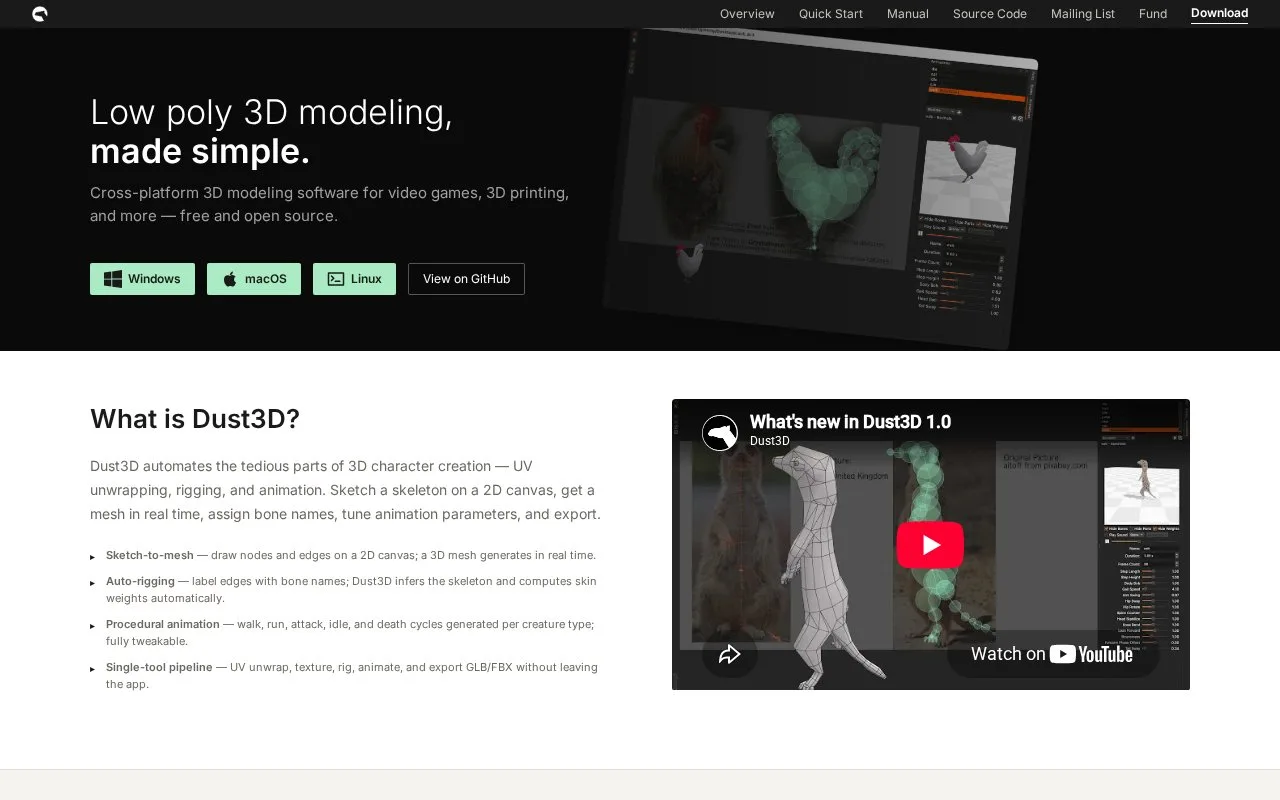
Dust3D is a free, MIT-licensed modeller that generates low-poly meshes from a 2D node sketch. It combines automatic UV work, bone-name rigging and procedural creature animation before GLB or FBX export. Downloads cover Windows, Linux and Apple Silicon Mac.
Sketch nodes and edges on Dust3D's 2D canvas to generate a 3D mesh in real time. Naming the edges as bones lets the application infer a skeleton and skin weights. Creature-specific motion controls can then generate walking, running, attacking, idling and death cycles before export.
UV unwrapping, texturing, rigging and animation stay in the same low-poly workflow, with GLB and FBX output for another tool or engine. To get started, run the platform build and open an example .ds3 file through File > Open. Windows uses an extracted ZIP, Mac uses a DMG and Linux uses an AppImage.
Dust3D is free under MIT terms. The pre-built Mac application requires Apple Silicon; Intel Macs are excluded from that binary. A Linux AppImage can also need the FUSE dependency.
Strengths
- Bone labels drive automatic skeleton and skin-weight generation.
- Creature motions have adjustable procedural parameters.
- GLB and FBX exports follow the same modelling and rigging workflow.
Watch out for
- The pre-built Mac binary requires Apple Silicon.
- Linux AppImage use can require FUSE.
Best for
- Low-poly creatures
- Sketch-based character prototypes
Sources
- Dust3D | Low Poly Modeling Tool (Oct 27, 2026)