What it does
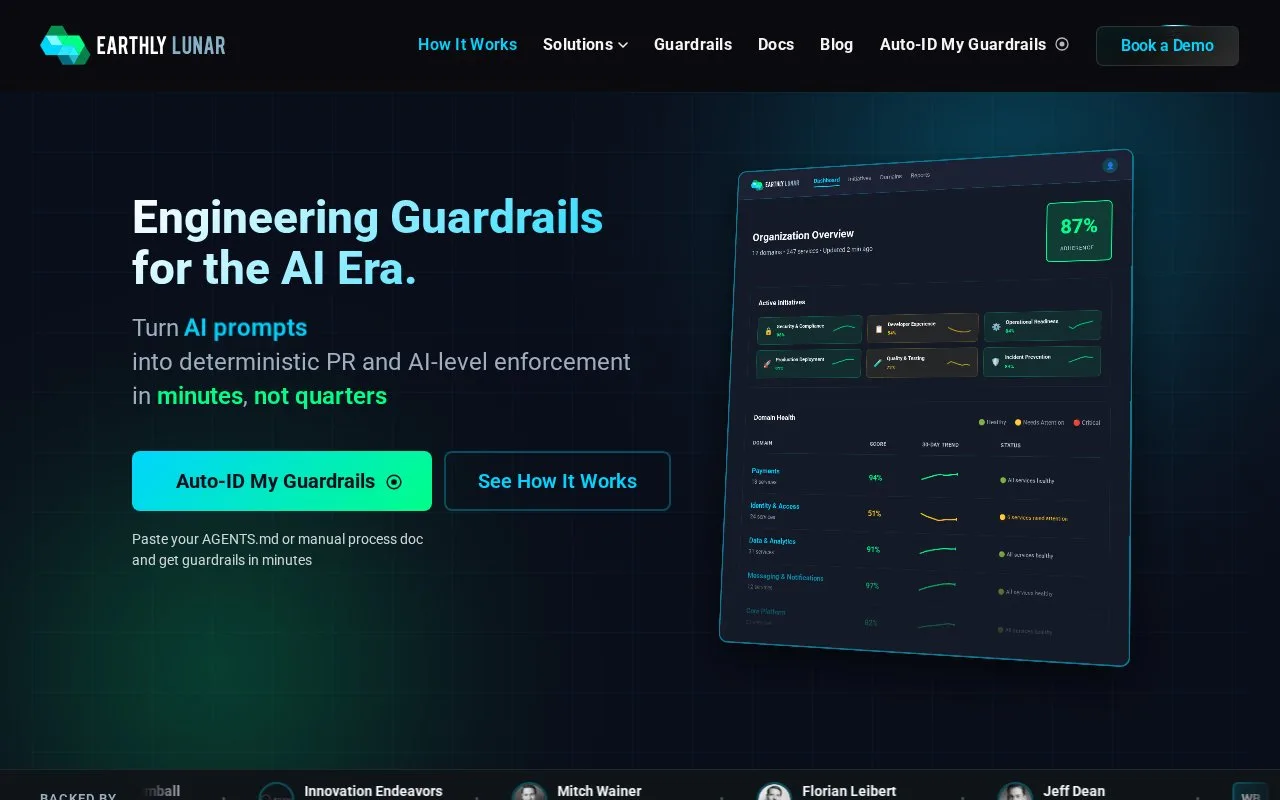
Earthly Lunar is an engineering-guardrails service that gathers software lifecycle signals from repositories and CI/CD systems, then checks shared standards against that data. It provides feedback in developer and AI workflows, pull requests, and deployment gates. Lunar complements build and test systems rather than running those jobs itself, making it relevant to platform teams that need consistent controls across many repositories.
Where it fits
Lunar is a policy and visibility layer around engineering workflows, not a build executor. Its official workflow describes using CI for repository-level builds and tests while Lunar applies organization-wide standards.
Roll out a guardrail
A useful first rule might check that services generate a software bill of materials or use a required security scan. Lunar describes two integration points: a GitHub App that reads repository material and a CI/CD tracer that observes pipeline processes. It normalizes collected signals into per-application JSON and evaluates them against guardrails-as-code. On code changes, the result can appear in pull requests and AI-assisted workflows, or be applied at a deployment gate.
The documented enforcement levels run from draft and scoring through pull-request reporting, pull-request blocking, and deployment blocking. A sensible example rollout is to start with visibility, review which repositories need attention, then increase enforcement for that specific rule.
Lunar is useful when standards need to be applied centrally across different repositories and pipelines. The trade-off is that it depends on instrumentation and does not replace tools that build, test, or deploy code. The reviewed pages direct interested teams to demo or automation calls to action; public pricing, trial terms, and self-service access were not established.
Strengths
- Applies shared guardrails across authoring, pull requests, and deployment stages.
- Central instrumentation collects repository and pipeline signals instead of requiring a separate standards rollout for every team.
- Documented enforcement can progress from draft and scoring to blocking pull requests or deployments.
Watch out for
- It is a guardrail layer rather than a build or test executor, so teams still need their existing CI tools for those jobs.
Best for
- Platform teams aligning engineering standards across many services and repositories.
- Introducing release policies gradually, from visibility and pull-request feedback to deployment gates.
Sources
- Earthly Lunar - Guardrails for the AI Era (Oct 25, 2026)
- How Lunar Works | Earthly (Oct 25, 2026)