
What it does
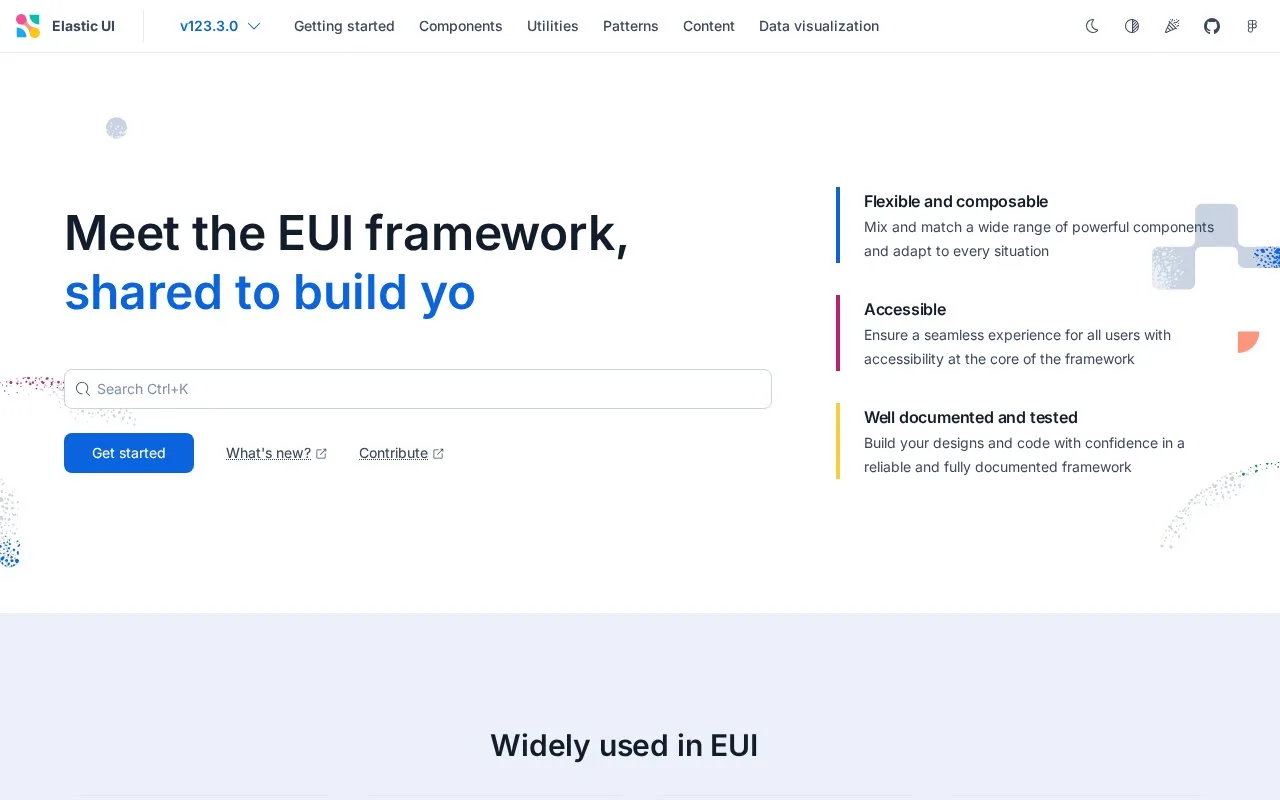
Elastic UI is a React interface framework for data-oriented applications. Its forms, tables and layout components sit alongside tokens, patterns, product-content guidance and data-visualization material. It is available under Elastic License 2.0 or SSPL v1, with licence conditions that matter when adopting the code.
Elastic UI’s tables support sorting, pagination, selection and actions, while forms include validation and grouped layouts. Patterns and content guidance help with the surrounding interface, including the words that explain controls and results.
The Setup page uses Yarn to install @elastic/eui and its peer dependencies; it explicitly says npm installation is unsupported. Wrap the application with EuiProvider, then import components from the package. Theme tokens can be read with useEuiTheme() and adjusted through provider settings. For CSS customization, supply your own class names rather than overriding internal .eui classes.
The current compatibility table supports React 17 and 18, but not React 19 or Strict Mode. Other bundlers and server rendering have qualifications, so check the listed environment before choosing it for a new application.
Public documentation and package access need no product account. Elastic License 2.0 grants royalty-free use with conditions, including a restriction on offering the software as a hosted service that exposes a substantial set of its functions. SSPL v1 is the alternative listed licence.
Strengths
- Data-oriented controls have supporting layout and content resources
- Theme tokens and component defaults can be configured centrally
- Setup lists framework and rendering compatibility explicitly
Watch out for
- The current setup does not support React 19 or Strict Mode
- The guide requires Yarn rather than npm installation
- Reuse is subject to the selected Elastic or SSPL licence terms
Best for
- Teams designing administration and data-oriented web applications
Sources
- Elastic UI Framework (Oct 27, 2026)
- Elastic UI setup (Oct 27, 2026)
- Elastic UI Elastic License 2.0 (Oct 27, 2026)