
What it does
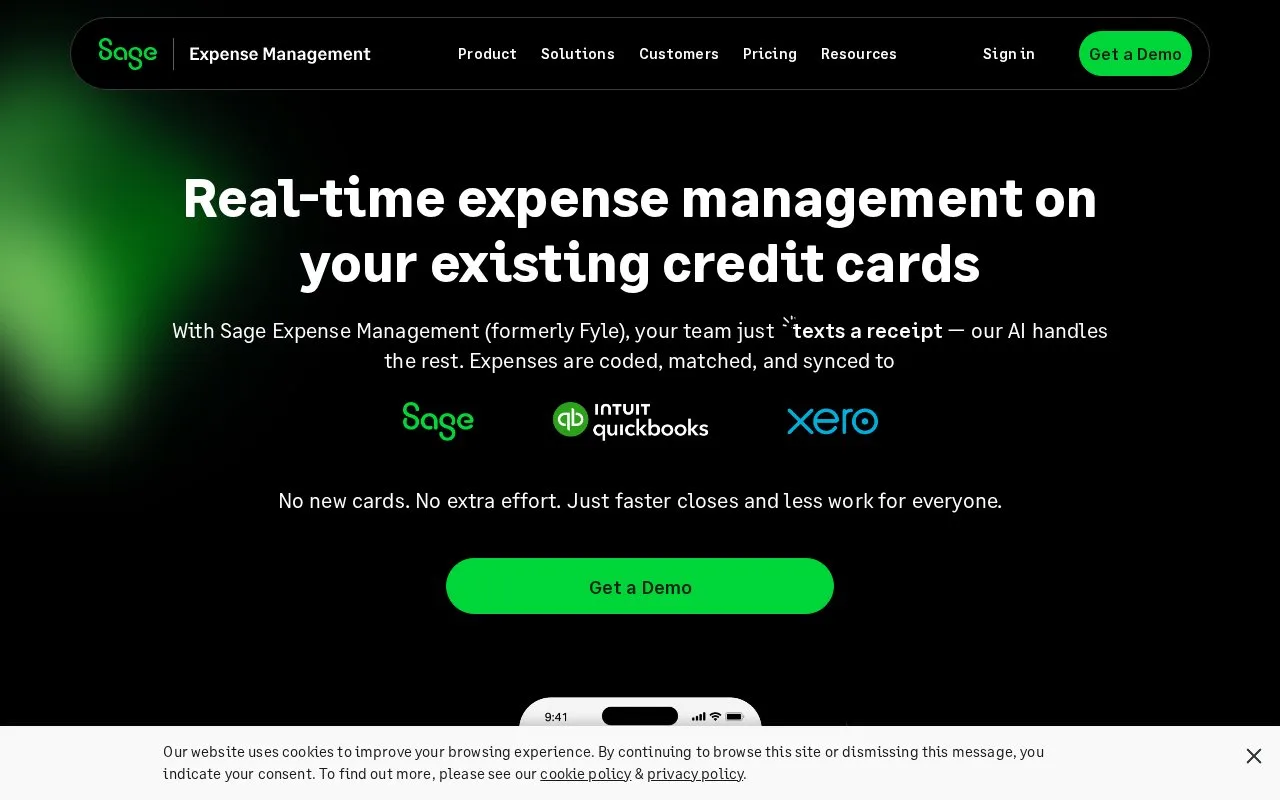
Sage Expense Management, formerly Fyle, collects receipts by text, matches them to card transactions and posts approved expense records to accounting systems. Employees need an activated company account. Subscriptions charge for active users and have minimum team sizes.
Sage Expense Management, formerly Fyle, works with an existing corporate-card program. Accounting categories, vendors and projects can be imported so employees code expenses using the finance team's structure. Approved records then pass to the accounting system.
Reply to the transaction alert
Activate the account through the company invitation. To use text receipts, opt in through the web task list or profile settings, enter a phone number and confirm the six-digit code. Mobile settings also provide an opt-in route.
When a supported card transaction needs information, reply to its text with a receipt photo or PDF. Follow the category and project prompts, then confirm with Save. Files must be below 5 MB. A receipt that cannot be matched to the transaction may create a new expense, so review the result before adding another entry manually.
For a personal purchase, start a message with New Expense and supply the requested details. Expenses still need to be put into a report and submitted through the company's approval process. Texting a receipt is only the capture step.
Annual subscription rates
| Plan | Advertised rate per active user per month | Minimum and fit |
|---|---|---|
| Growth | $11.99, billed annually | Five users; single-stage approval |
| Business | $14.99, billed annually | Ten users; multiple approval stages and organizations |
| Enterprise | Quote | Organizations with 250 or more employees |
A user counts as active after creating an expense or receiving a connected corporate-card transaction in the month. Minimum user commitments still apply. Business adds US ACH reimbursements and further accounting connections; some integrations have implementation or other charges. Existing Sage Intacct customers may receive different pricing. Carrier messaging charges can also apply.
Strengths
- Receipts and coding can be collected in a text conversation
- Imported accounting categories keep expense coding consistent
- Existing corporate cards can feed the expense workflow
Watch out for
- An unmatched receipt can create a separate expense
- Annual plans have minimum user commitments
- Some accounting integrations carry additional charges
Best for
- Businesses retaining their existing corporate cards
- Teams coding expenses to clients or projects
Sources
- Sage Expense Management (Oct 27, 2026)
- Sage Expense Management plans (Oct 27, 2026)
- Text receipt and expense coding guide (Oct 27, 2026)
- Opt in to text messages (Oct 27, 2026)
- First steps for employees (Oct 27, 2026)