
What it does
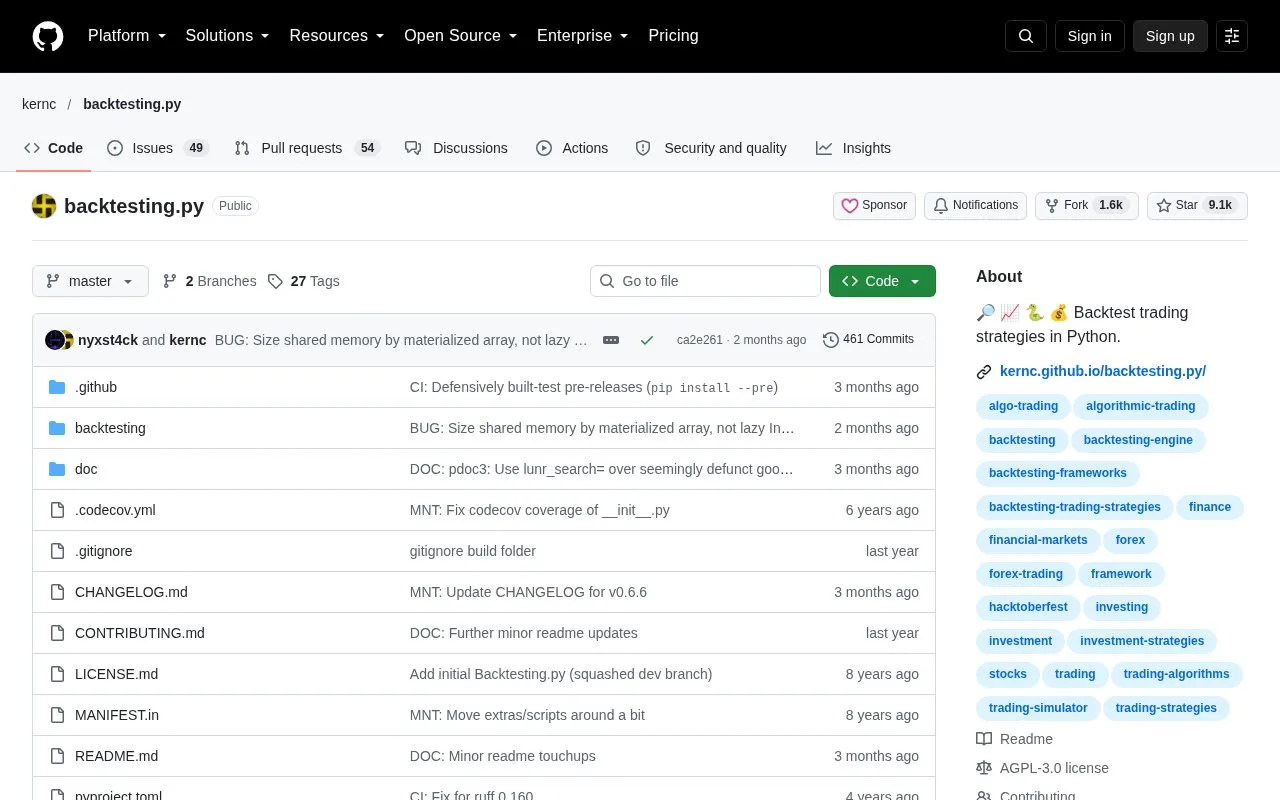
Backtesting.py is a Python framework for simulating trading rules, comparing parameter settings and plotting results. It works with one tradable asset at a time using open, high, low and close price data. The package is freely available under AGPL version 3 and runs in a local Python environment.
Backtesting.py suits a focused question about entry and exit rules for one instrument. Supply a pandas table with Open, High, Low and Close columns, plus optional Volume. It is not designed for stock selection, arbitrage across assets or whole-portfolio rebalancing.
Define indicators in a Strategy’s init() method and the per-bar decisions in next(). Construct a Backtest with the data, strategy, starting cash and commission assumption. Calling run() returns summary metrics, the equity curve and detailed trades; plot() creates an interactive view. Installation uses pip install backtesting, without registering for a hosted service.
Strategy parameters can be compared through optimize(). Supply the allowed values and a constraint that rejects unsuitable combinations, such as a fast moving average period that is not shorter than the slow period. The objective can be a selected result metric, rather than only final portfolio value.
The simulation makes decisions once each price bar is available. It cannot infer the path inside a candle; finer timing requires finer input data. Market orders normally use the next bar’s open, with a separate option to use the current close. These choices affect the meaning of the resulting trades. The project’s AGPL licence also needs attention when modifying the framework for a network service.
Strengths
- Returns detailed trades and equity history alongside summary statistics
- Parameter searches accept constraints on allowed combinations
- Interactive charts connect strategy events with price history
Watch out for
- The core workflow handles one instrument at a time
- Bar data cannot establish an exact price path within each candle
Best for
- Python users prototyping single-instrument entry and exit rules
- Analysts comparing parameter choices with explicit trading costs
Sources
- Backtesting.py package installation and result structure (Oct 27, 2026)
- Backtesting.py quick start, optimization and bar limitations (Oct 27, 2026)
- Backtesting.py Python API reference (Oct 27, 2026)
- Backtesting.py GNU AGPL version 3 licence (Oct 27, 2026)