
What it does
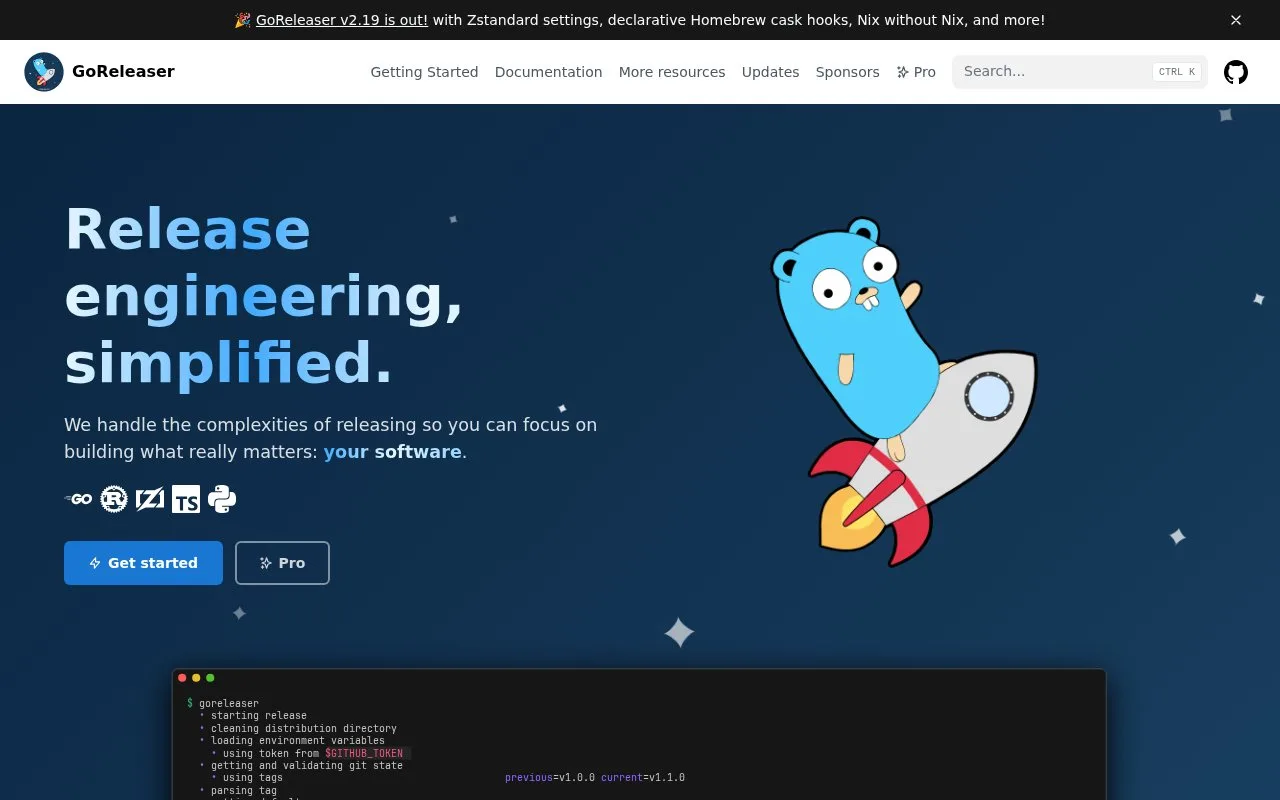
GoReleaser automates release packaging and publication after a project is ready to ship. A configuration file describes the build and publishing steps; a release can produce binaries, archives, installers, container images, checksums, or other packages, then publish them to source-control hosts, registries, and storage destinations. It occupies the artifact-release stage rather than serving as a general-purpose test runner.
Configure the release output
The official quick start creates a .goreleaser.yaml configuration, runs a local snapshot release, and checks the configuration before a real publication. The --snapshot path writes artifacts locally rather than uploading them, which is useful for reviewing generated output before wiring release credentials into CI. The documented process expects a clean working tree and a semantic-version-compatible version.
A normal run progresses through configuration defaults, building, publishing, and optional announcements. The build stage can assemble binaries, archives, packages, and container images; publishing sends the selected outputs to a configured source-control host, registry, or storage target. To publish to GitHub, the quickstart requires a token with repository write permissions. These are described workflows, not commands executed for this listing.
The core GoReleaser repository is MIT licensed. GoReleaser Pro is a separate commercial binary covered by its own EULA. The official Pro page opened during research, but its retrieved text did not expose the current price table, so no Pro price is quoted.
Strengths
- The documented release sequence covers artifact building, package assembly, publishing, and announcements.
- A local snapshot release can generate output without uploading it to a release destination.
Watch out for
- The documented release process expects a clean working tree and a SemVer-compatible version.
- Publishing to GitHub requires a token with repository write permissions.
Best for
- Maintainers who want repeatable binary and package releases from a tagged project version.
- CI jobs that need to publish release artifacts to source control, package registries, or storage destinations.
Sources
- GoReleaser v2.19 documentation and product site (Oct 25, 2026)
- Quick Start | GoReleaser (Oct 25, 2026)
- How it works | GoReleaser (Oct 25, 2026)
- GoReleaser Pro | GoReleaser (Oct 25, 2026)
- GoReleaser upstream repository README (Oct 25, 2026)
- MIT License (Oct 25, 2026)
- GoReleaser End User License Agreement (Oct 25, 2026)