
What it does
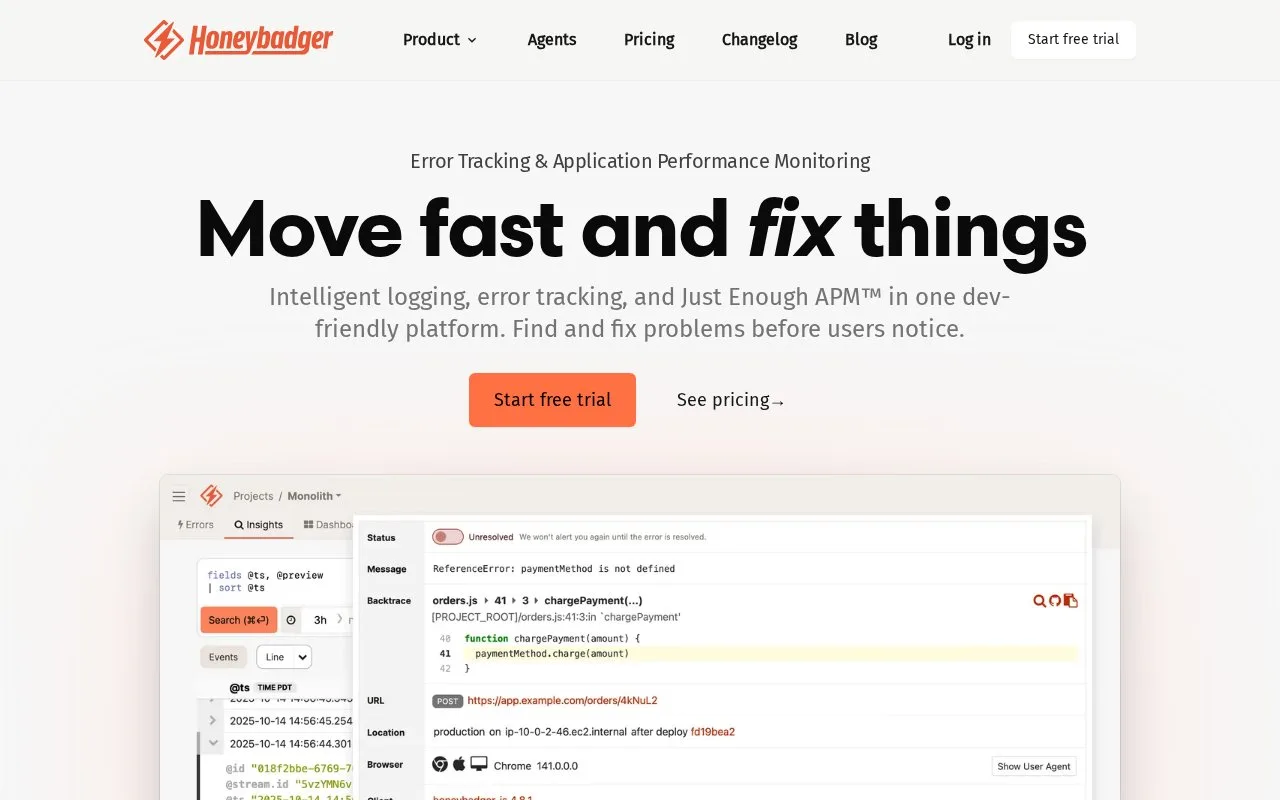
Honeybadger collects application exceptions and performance signals, checks public URLs from outside the application, and lets scheduled processes report that they completed. A Ruby notifier can be added to an application so errors arrive with context; uptime checks test an HTTP status or response body, while check-ins alert when a cron job misses its expected schedule. Its free Developer plan covers small projects, with paid tiers for larger teams and usage.
Instrument an application and its scheduled work
For a Ruby project, Honeybadger's getting-started guide adds the honeybadger gem, runs bundle install, then uses bundle exec honeybadger install YOUR_PROJECT_API_KEY to create a configuration file. The guide says this command also sends a test exception; that is a documented setup, not something run for this listing. A service can then report uncaught exceptions with application context, while an explicit notification can report a rescued error.
The same account can check an external URL and validate its HTTP status or response body. For scheduled work, configure a check-in with the expected schedule and grace period, then send a pulse only after the job finishes. A nightly export, for example, can report success after it writes the expected file; a missing pulse alerts when the job silently stops running. These signals detect errors or missed work, but teams still need logs and traces when they want to identify an internal cause.
The Developer plan is free forever; team plans add usage limits and capabilities. One practical caveat is that Cloudflare bot protection can prevent the external uptime robot from reaching a site, so verify that the monitored endpoint accepts the check.
Strengths
- Application exceptions can be reported with contextual data through a language notifier.
- External uptime checks can validate status codes or response bodies, and scheduled-job check-ins detect missing pulses.
- The free Developer plan provides an entry point for smaller applications.
Watch out for
- External checks may not reach sites that block automated requests, including some Cloudflare bot-protection configurations.
- Error tracking, uptime checks, and check-ins detect events but do not replace the application's own log and trace investigation.
Best for
- Small teams that want application error reports, basic uptime checks, and scheduled-job heartbeats in one service.
- Ruby application teams that want a documented notifier installation workflow.
- Operators who need missed-run alerts for cron jobs or background processes.
Sources
- Honeybadger Error Tracking and Application Monitoring (Oct 25, 2026)
- Ruby Getting Started (Oct 25, 2026)
- Uptime monitoring (Oct 25, 2026)
- Check-ins (Oct 25, 2026)
- Honeybadger Plans and Pricing (Oct 25, 2026)