
What it does
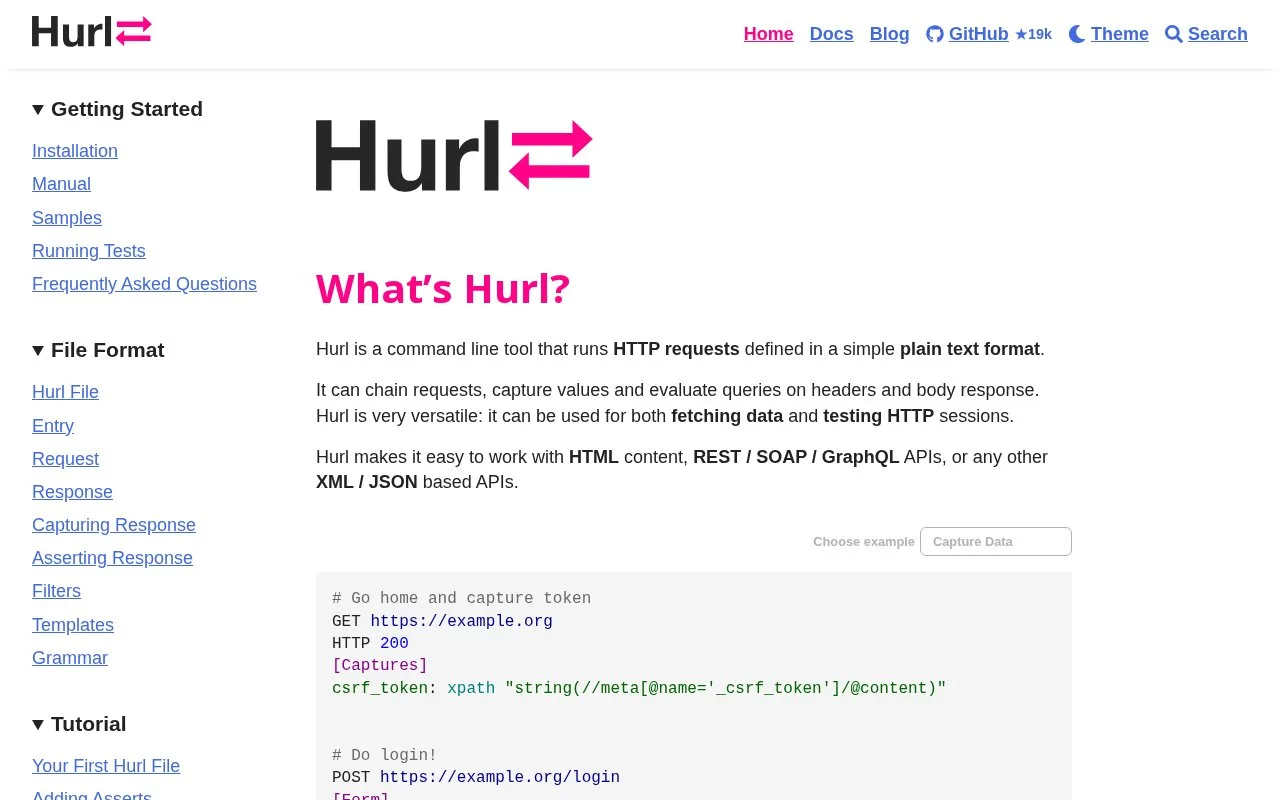
Hurl reads plain-text files that describe HTTP requests, then can check response status, headers, and body content. A test file can chain requests, capture a value from one response, and use it in a later call. This makes Hurl useful for API integration and endpoint regression tests that belong in a shell script or CI job. The user supplies the endpoints, credentials, data, and assertions; Hurl does not provide the API being tested.
Put the request and the expectation together
Create a .hurl file with an HTTP method and URL, then add assertions for the response, such as an expected status or a value in the body. The official tutorial shows writing a first file and adding assertions; the manual distinguishes ordinary request execution from test mode, which reports pass or failure for each file. A CI job can run the same test definitions after a service is deployed to a test environment. No HTTP request was sent for this listing.
Hurl is more than a command-line request sender because it can capture response values and use them in later chained requests. That supports a login-to-resource flow: authenticate, capture a returned token, then use the token in a second request and check its response. Keep such tests pointed at a disposable or staging service and store credentials outside the test file.
The project is licensed under Apache License 2.0. Hurl tests the HTTP behavior you specify; it does not create the endpoint, determine the correct business rule, or replace a load test. Make assertions narrow enough to catch regressions without depending on incidental response fields.
Strengths
- Keeps HTTP requests and response assertions in readable files that can be reviewed and run in CI.
- Supports chained requests and captured values for multi-step API workflows.
- The official project is available under Apache License 2.0.
Watch out for
- A test author must provide a reachable endpoint, test data, credentials when needed, and the expected response rules.
- Hurl validates HTTP behavior but does not generate application load or provide a browser-driven UI test.
Best for
- API teams checking response contracts across deployments
- Developers testing authentication and other multi-request HTTP flows
- CI pipelines that need repeatable endpoint checks from plain-text test files
Sources
- Hurl - Run and Test HTTP Requests (Oct 25, 2026)
- Your First Hurl File (Oct 25, 2026)
- Running Tests (Oct 25, 2026)
- Manual (Oct 25, 2026)
- License (Oct 25, 2026)