
What it does
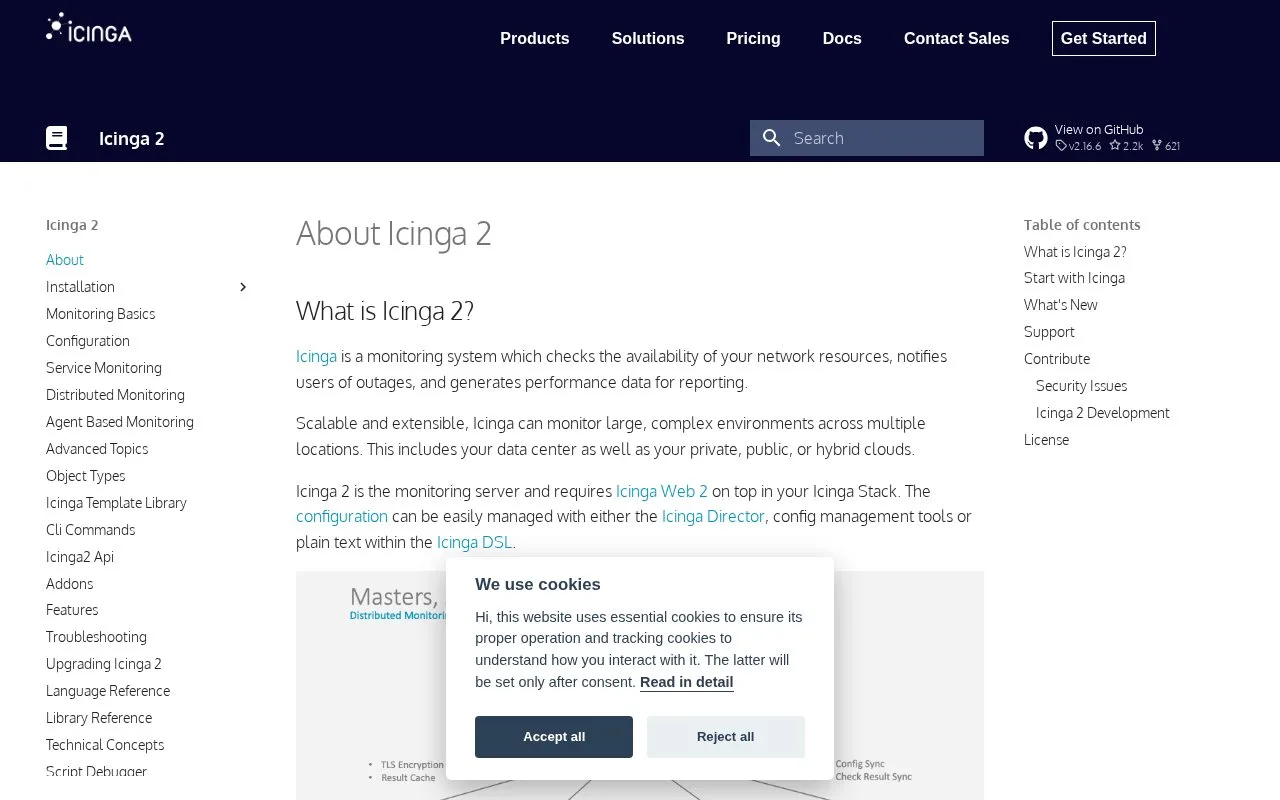
Icinga 2 is the monitoring server in the Icinga stack. It checks the availability of network resources and generates notifications and performance data for reporting across data centers and public, private, or hybrid clouds. Configure checks with Icinga Director, configuration-management tools, or the Icinga DSL; the web interface is provided by Icinga Web 2.
Start with one monitored host
The official quickstart installs Icinga 2, Icinga DB, Icinga Web 2, and a database on one node so a new operator can follow the host-to-alert path before designing a distributed setup. The guide lists MySQL 8.0 or later, or MariaDB 10.2.2 or later, for its database step. Add a host and service check, then confirm the resulting notifications before extending the configuration to other systems.
Icinga 2 is an open-source monitoring server licensed under GPLv3. Its modular stack gives operators room to choose configuration tools, but it also means the server is not a complete standalone interface: the documented stack adds Icinga Web 2 and Icinga DB. The public pricing page returned only its title in the accessed response, so paid subscriptions and module terms are not described here.
Strengths
- Checks availability and produces notifications and performance data across distributed environments.
- Configuration can be managed through Icinga Director, configuration-management tools, or the Icinga DSL.
- The quickstart documents a single-node path before distributed monitoring.
Watch out for
- Icinga 2 is the monitoring server and requires Icinga Web 2 in the documented stack.
- The quickstart requires a separate SQL database and several Icinga components.
Best for
- Infrastructure teams that want to define explicit checks and notifications for hosts and services.
- Operators who need to expand from one node to distributed monitoring across hybrid infrastructure.
Sources
- About - Icinga 2 (Oct 25, 2026)
- Get started with Icinga (Oct 25, 2026)
- LICENSE.md | Icinga/icinga2 (Oct 25, 2026)
- Icinga Pricing and Subscription Options | Open Source Monitoring (Oct 25, 2026)