
What it does
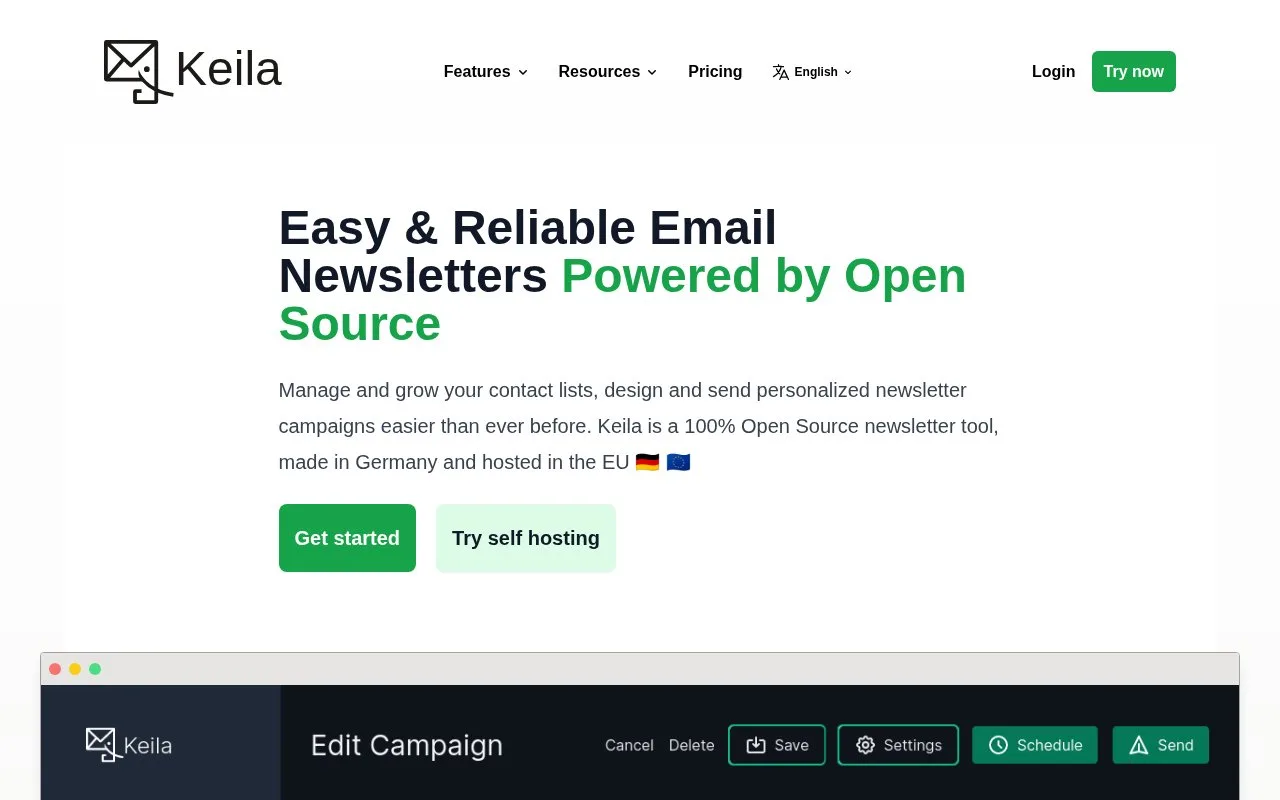
Keila is an open-source newsletter tool with visual, Markdown and plain-text editing, signup forms and segmentation. It can be self-hosted or used through Keila Cloud, with several delivery-provider options and an application programming interface (API) for integrations.
Keila gives a newsletter editor a choice of writing tools. A plain editorial letter can use Markdown or plain text, while the visual editor and MJML support serve more designed editions. Signup-form fields and external contact data can feed segments and personalized messages.
Tracking is a separate choice: the product offers analytics but allows tracking to be switched off. A community publisher can send newsletters without collecting open or click measurements.
Keila Cloud bills by a monthly sending allowance and includes unlimited contacts and projects; it has no free hosted plan. Self-hosting is a different operating route, with official Docker images and support for several sending providers. Its first launch creates a local administrator account. The core is AGPLv3-licensed, including source-availability conditions for modified network-served versions. The repository excludes the logo and extra directory from that license, which matters if the installation is being redistributed or rebranded.
Keila Cloud costs
Cloud starts at EUR €8 per month for 2,000 emails. The €16 plan includes 5,000 emails and the €32 plan includes 15,000. All include unlimited contacts and projects. Create a Cloud account through Sign up, or follow Try self hosting to run the open-source software yourself. A free self-hosted installation still needs a server and email delivery.
Strengths
- Visual, Markdown, plain-text and MJML routes support different newsletter styles
- Tracking can be disabled while retaining the newsletter workflow
Watch out for
- Cloud access uses paid sending plans rather than a permanent free tier
- Self-hosting requires operating the application and arranging delivery
Best for
- Publishers choosing an open-source newsletter tool with explicit tracking controls
Sources
- Keila - Open Source Email Newsletters Easy & Reliable (Oct 25, 2026)
- GitHub - pentacent/keila: Open Source Newsletter Tool. · GitHub (Oct 28, 2026)
- keila/LICENSE.md at main · pentacent/keila · GitHub (Oct 25, 2026)
- Keila Cloud pricing and self-hosting options (Oct 27, 2026)
- Keila self-hosted first steps and local administrator (Oct 28, 2026)