
What it does
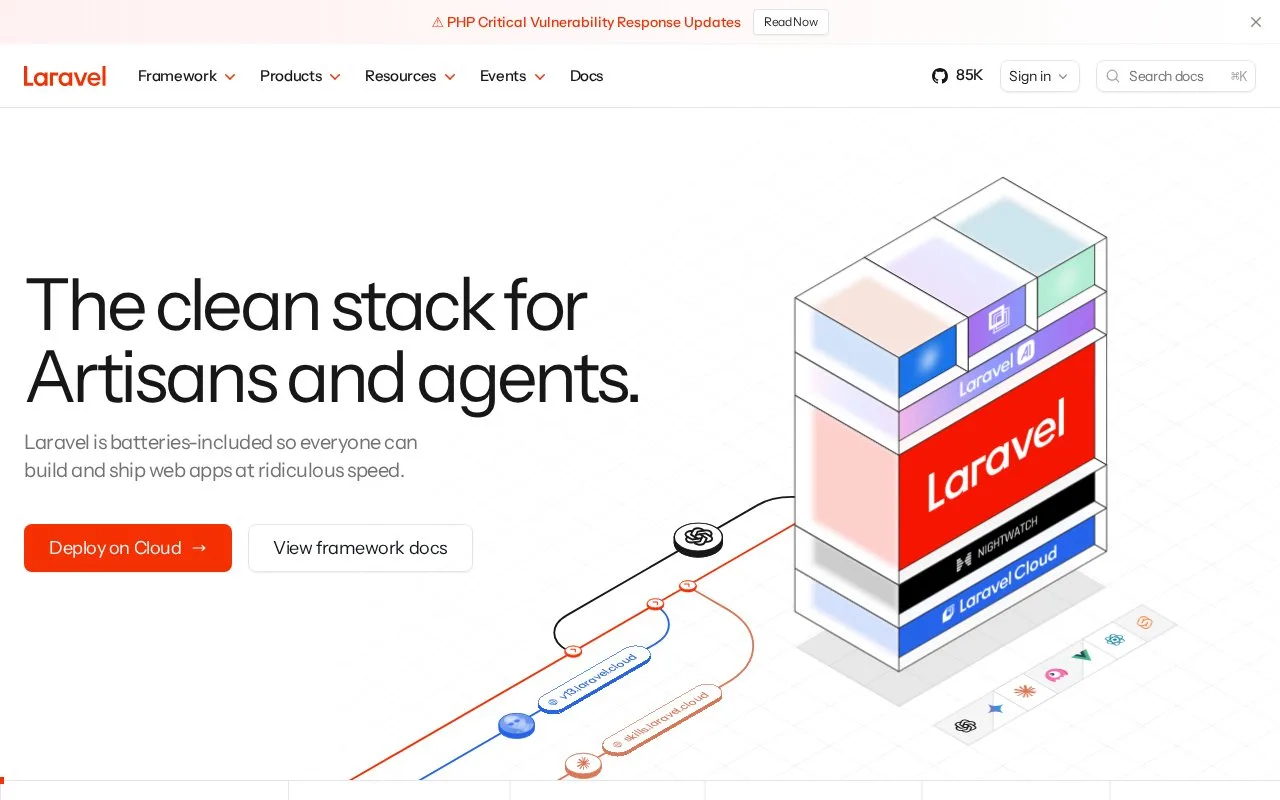
Laravel is a PHP framework for building web applications. Its installer creates a project with a defined structure, and its documentation covers application configuration, databases, migrations, and starter kits for common frontend and authentication work. The framework is suited to PHP teams that want an opinionated path from a local project to a complete application rather than assembling every layer from scratch.
Laravel's installation guide treats setup as a local toolchain. It asks the reader to install PHP, Composer, and the Laravel installer, then uses laravel new to create an application. The guide's example builds frontend assets with the selected JavaScript package manager and starts the local application with Composer's development script. These are illustrative commands from the official guide, not commands run for this listing.
Once the skeleton exists, Laravel's documentation separates core configuration from optional starter kits. A starter kit can provide a frontend and authentication starting point, while the framework's own guides cover databases and migrations. That makes a small first task concrete: create an app, add one route and view, then decide whether a starter kit matches the application's sign-in and UI needs instead of accepting it by default.
Laravel is broader than a PHP routing library, and its setup includes both backend and frontend tooling. A project may also need a database service and a production host, which are separate choices. The framework's official license page publishes the MIT License. This listing is for the Laravel framework, not Laravel Cloud or the other commercial products in the Laravel ecosystem.
Strengths
- The official installer creates a structured application project from the command line.
- The documentation connects initial setup with configuration, database migrations, and optional starter kits.
- Starter kits provide a selectable starting point for frontend and authentication features.
Watch out for
- Local project setup requires PHP and Composer, and frontend assets add a JavaScript package-manager step.
Best for
- PHP developers building full web applications with a conventional project structure.
- Teams that want optional starter kits for frontend and authentication setup.
- Projects that need application code, migrations, and local development tasks in one framework workflow.
Sources
- Laravel (Oct 25, 2026)
- Installation (Oct 25, 2026)
- Starter Kits (Oct 25, 2026)
- laravel/framework (Oct 25, 2026)
- Laravel Framework license (Oct 25, 2026)