What it does
Lit is a JavaScript library for building web components on browser standards. Its LitElement base class, reactive properties, scoped styles, and HTML template system help developers define reusable custom elements without adopting an application-wide frontend framework. The project can be added to a JavaScript package with npm and suits design systems or apps that need components reusable across different frontend stacks.
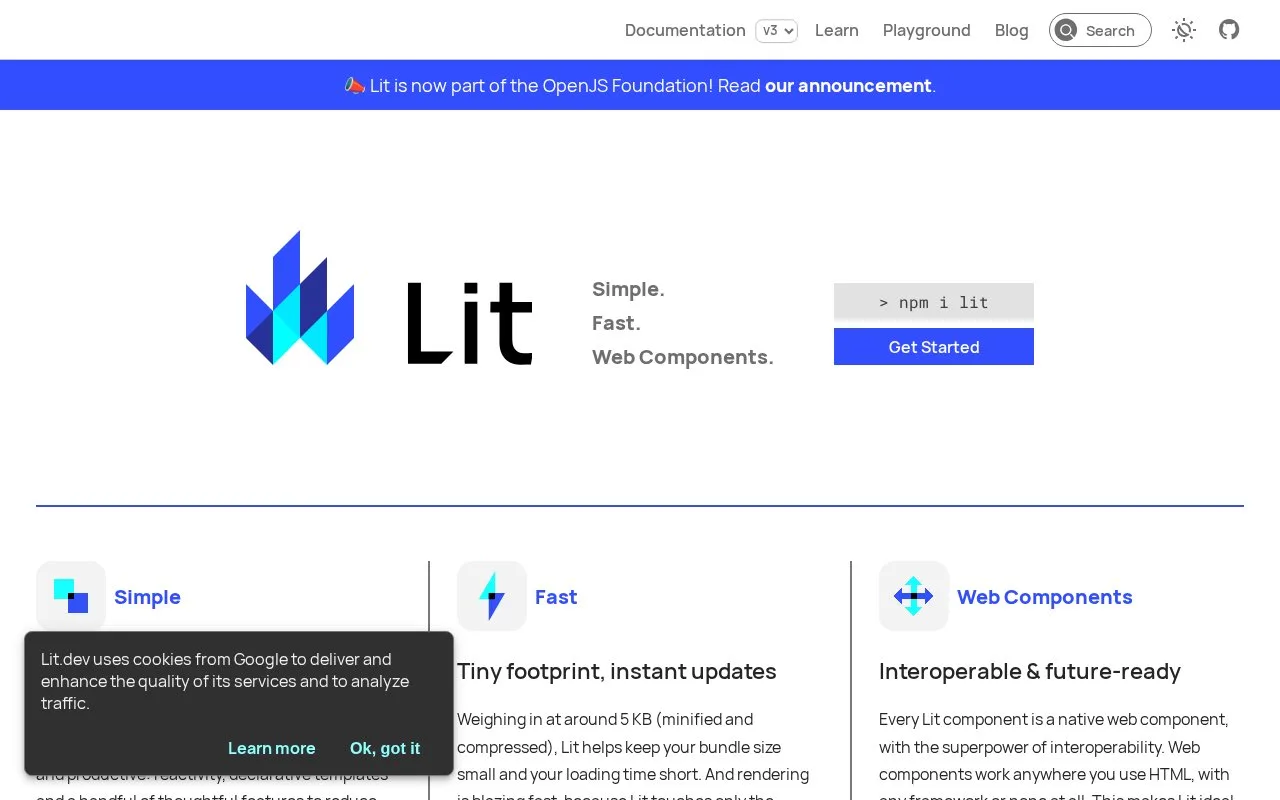
The official site and repository README show npm i lit as the package setup. A first component can extend LitElement, declare a property, and return an html template from render(); the homepage's sample also shows component-scoped CSS and a custom element decorator. The sample is documentation, not code run for this listing.
This workflow is useful when a team wants browser-native custom elements that can be reused by different parts of a site. Lit supplies a component base, reactive properties, styles, and templates; the surrounding application still chooses routing, data loading, and how those elements are composed. That makes Lit a component library rather than a full site framework.
The project uses the BSD 3-Clause license. The repository is a monorepo with related packages such as lit-html and @lit/reactive-element, while this entry describes the main lit package. The documentation pages for getting started and component overview returned navigation shells through the public fetcher; the official homepage and repository README were readable and support the workflow summarized here.
Strengths
- The project builds on Web Components standards and adds reactive properties, templates, and scoped styles.
- The official site provides an npm install command and a component example.
- Custom elements can be reused across frontend stacks rather than tied to one application framework.
Watch out for
- Lit provides the component layer; applications still need their own routing, data flow, and deployment choices.
- Developers should understand custom elements and the browser component model to use the library effectively.
Best for
- Design systems that need reusable custom elements across several frontend applications.
- Teams that want reactive templates and scoped styles without adopting one full application framework.
- Projects that already use Web Components and want a higher-level component base.
Sources
- Lit (Oct 25, 2026)
- Lit repository README (Oct 25, 2026)
- lit/lit (Oct 25, 2026)
- BSD 3-Clause License (Oct 25, 2026)