What it does
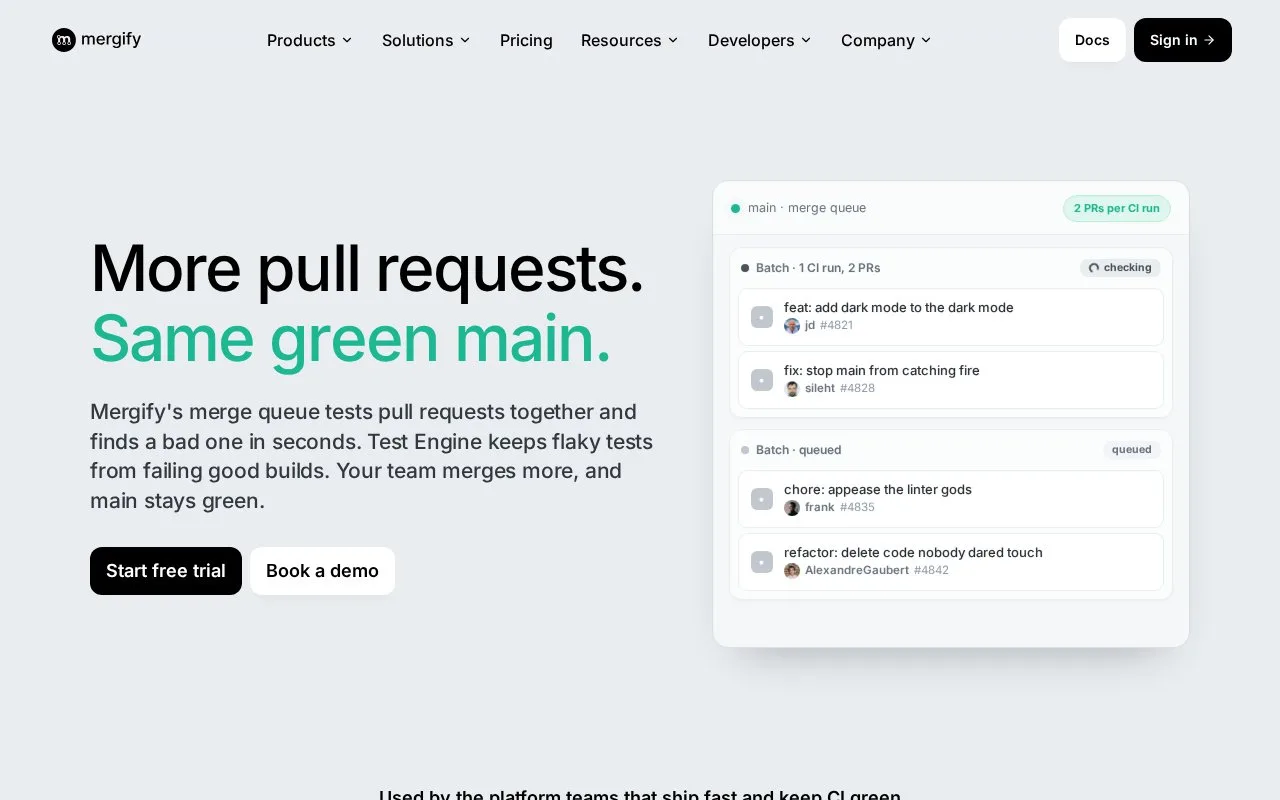
Mergify adds merge automation and CI-focused tools to GitHub pull request workflows. Its merge queue batches or updates queued changes against the current target branch before CI runs, while Test Engine and CI Insights address flaky tests and job visibility. It works with existing CI providers rather than replacing them. A free plan is available for open-source projects and small private teams, with paid plans for larger or more controlled deployments.
Put one pull request through the queue
The official setup guide starts by installing the Mergify GitHub App on a repository. If a GitHub ruleset protects the destination branch, add Mergify as an exempt bypass actor so the queue can manage its temporary branches; the guide says to skip this step when no ruleset applies. Then comment @mergifyio queue on an open pull request. Mergify updates it against the latest main branch, waits for CI, and merges it when checks pass. A dashboard shows the queue's state.
This is useful when pull requests pass separately but may fail when combined. Batching and parallel checks can reduce repeated work, while Test Engine's retry and quarantine features address flaky tests. The CI provider remains responsible for running the project's jobs; Mergify coordinates how pull requests enter the protected branch. The steps above are from documentation, not an installed integration or a merge performed for this listing.
Match the plan to the team
The pricing page lists a free plan for open-source projects and private teams of up to five active contributors, plus a paid Max tier and custom Enterprise arrangements. The plan comparison varies by contributor count, data retention, support, and deployment options. Teams that need on-premise operation or custom retention should check the Enterprise terms rather than assuming the hosted plan covers them.
Because this workflow changes how pull requests pass branch protections, review the bypass configuration with repository owners before enabling it. Mergify is most useful when the team already relies on GitHub pull requests and wants a queue to coordinate its existing checks.
Strengths
- The queue updates pull requests against the current target branch before running checks, reducing the gap between isolated and combined CI results.
- It integrates with existing CI providers and includes separate tools for flaky-test handling and CI job visibility.
- The pricing page lists a free tier for open-source projects and small private teams.
Watch out for
- It requires installing a GitHub App and, for protected rulesets, configuring an appropriate bypass actor.
- The workflow is designed around GitHub pull requests rather than being a general CI runner.
Best for
- Teams merging many pull requests into a protected main branch
- Repositories where flaky checks or combined changes make CI results hard to trust
Sources
- More Pull Requests. Same Green Main. (Oct 25, 2026)
- Setting Up a Merge Queue (Oct 25, 2026)
- Mergify Pricing (Oct 25, 2026)