
What it does
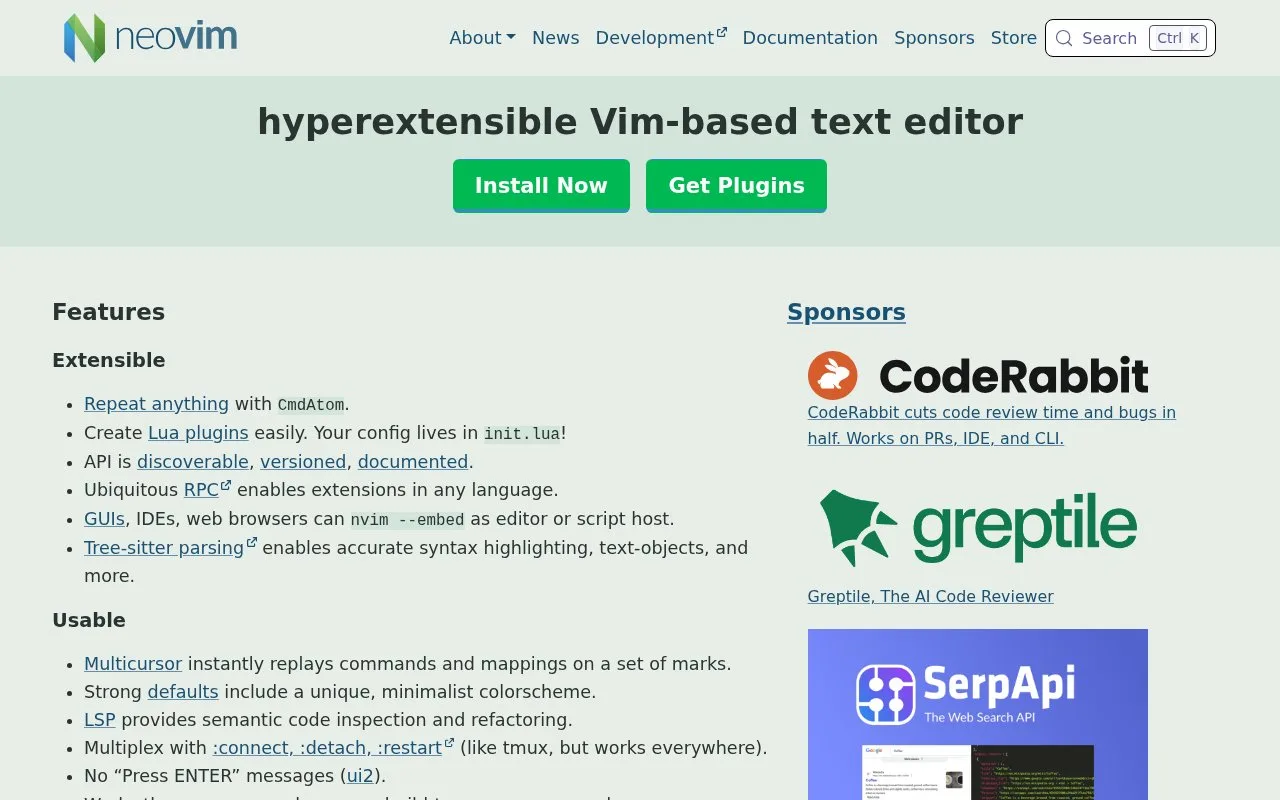
Neovim is a hyperextensible text editor that keeps the keyboard-centered Vim editing model while adding a documented API, Lua plugin support, and an RPC interface for integrations written in other languages. It runs as a terminal editor and can also be embedded by GUIs and other tools. The project is for people who want to configure an editor around their own commands and coding habits.
Neovim's starting point is opening a file or project in the editor and learning a few commands from its built-in :help documentation. The user manual links to introductory material and explains how the help pages are navigated. Once the basic editing model is familiar, init.lua becomes the place to add configuration and Lua plugins; the project also documents an API and RPC interface for integrations beyond Lua.
This flexibility comes with a setup cost. A reader who expects a mouse-first editor with a ready-made project interface may need a GUI distribution or additional configuration. Neovim's license is primarily Apache 2.0, with some contributed portions under Vim's license, so check the full file if redistributing a modified build.
Strengths
- The project supports Lua-based plugins and user configuration in `init.lua`.
- The API is documented and versioned, and RPC allows extensions to use other languages.
- The editor can be embedded by GUIs and other tools.
Watch out for
- A highly configurable, modal editor may require learning its editing commands and assembling a preferred interface.
Best for
- Developers who prefer keyboard-driven editing and custom editor configuration
- Integrating an editor into a GUI, IDE, or language-specific workflow
Sources
- Neovim (Oct 25, 2026)
- Nvim documentation (Oct 25, 2026)
- Neovim license (Oct 25, 2026)