
What it does
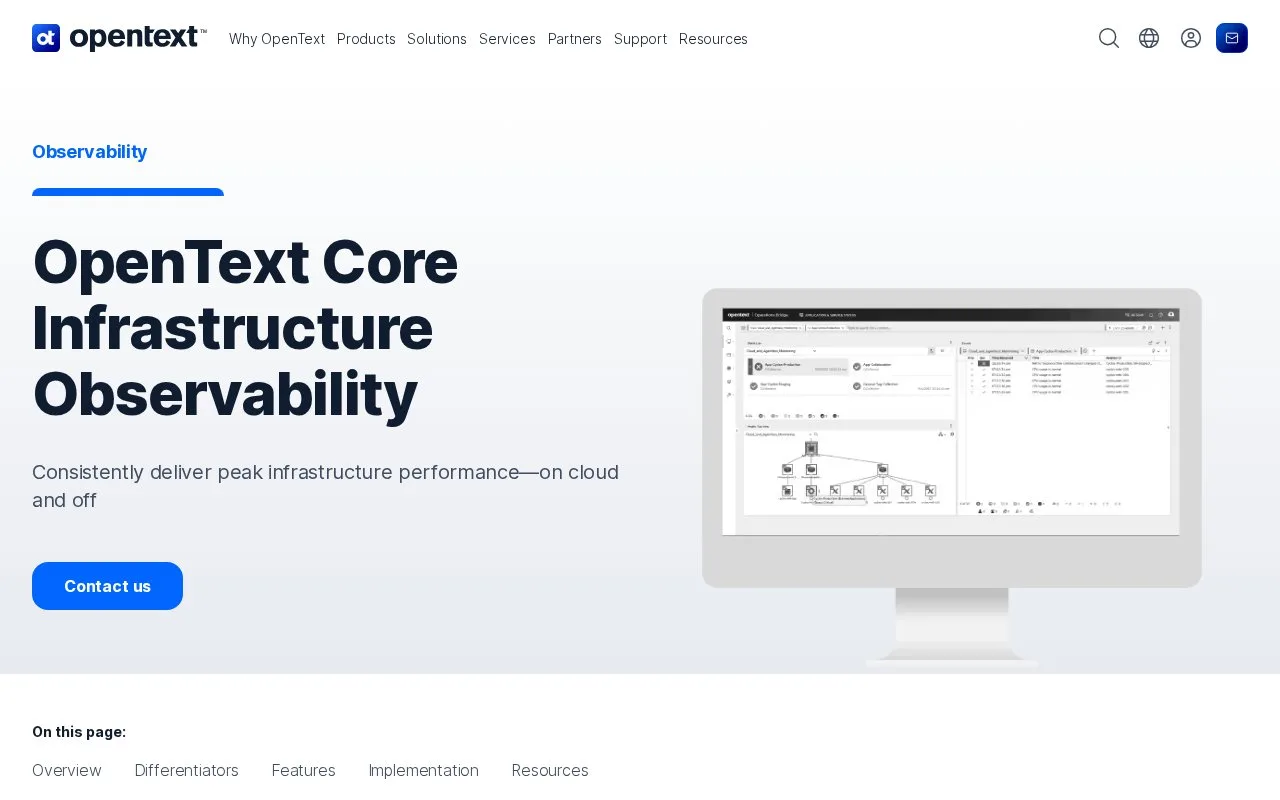
OpenText SiteScope is an agentless infrastructure and application monitoring product for teams that need to check the performance and availability of remote systems. Its current 26.2 documentation describes more than 100 built-in monitor types for areas such as servers, databases, networks, virtualization, cloud services, and web transactions, plus custom monitors for other environments. SiteScope queries targets through network protocols or platform-specific services, then presents measurements and status in its dashboard. This approach avoids installing a monitoring agent on every target, but the SiteScope server still needs network reachability and appropriate credentials for the checks it runs.
Configure checks around the systems you operate
In the SiteScope interface, add a monitor to a group, select a built-in check, and configure its remote target and collection settings. For example, a team could use a URL monitor to verify a web endpoint, an SNMP monitor for a network device, or a server monitor to collect resource measurements. The documentation describes more than 100 built-in monitors, and templates can help apply a repeatable set of checks across similar systems. Thresholds can report Good, Warning, or Error, while monitor dependencies can suppress lower-level alerts when a basic availability check already shows that a host is down.
Add notifications and reports where they help
After a monitor is collecting data, configure alert actions for status changes and use reports to review measurements over time. SiteScope's API can also be used when working with monitors. The product is not a remote agent that discovers every target automatically: most checks emulate a web or network client, so the monitoring server must be able to reach the target and use the relevant protocol or remote account.
SiteScope is part of OpenText's infrastructure operations portfolio. The current OpenText page describes its relationship with the broader Core Infrastructure Observability service, while the SiteScope documentation describes the monitoring software itself. A limited free SiteScope for Load Testing license exists for LoadRunner and Performance Center scenarios, but its documentation explicitly says that installation is not intended for production monitoring. The workflow above is documentation-based; no SiteScope installation or target was configured for this listing.
Strengths
- Offers more than 100 built-in monitor types for infrastructure, applications, databases, networks, virtualization, and web transactions.
- Uses remote checks through standard protocols and supported platform services, reducing the need to install agents on every monitored host.
- Combines thresholds, alert actions, templates, monitor dependencies, dashboards, and reports in one monitoring workflow.
Watch out for
- The monitoring server needs network access and suitable credentials for the systems and services it queries.
- Licenses and monitor capabilities vary by edition and capacity; the free Load Testing installation is limited and is not intended for production monitoring.
- Some checks depend on operating-system-specific services or connection methods, so compatibility must be confirmed for each target.
Best for
- IT operations teams that want centrally managed checks for mixed infrastructure and application environments.
- Organizations that prefer remote protocol-based monitoring and can manage the required network access, credentials, and licenses.
Sources
- SiteScope Overview - SiteScope (Oct 26, 2026)
- Create Monitors in SiteScope - SiteScope (Oct 26, 2026)
- Cloud Infrastructure Observability & Sitescope Software (Oct 26, 2026)
- Memory Monitor - SiteScope (Oct 26, 2026)
- Integrate Load Testing Products - SiteScope (Oct 26, 2026)