
What it does
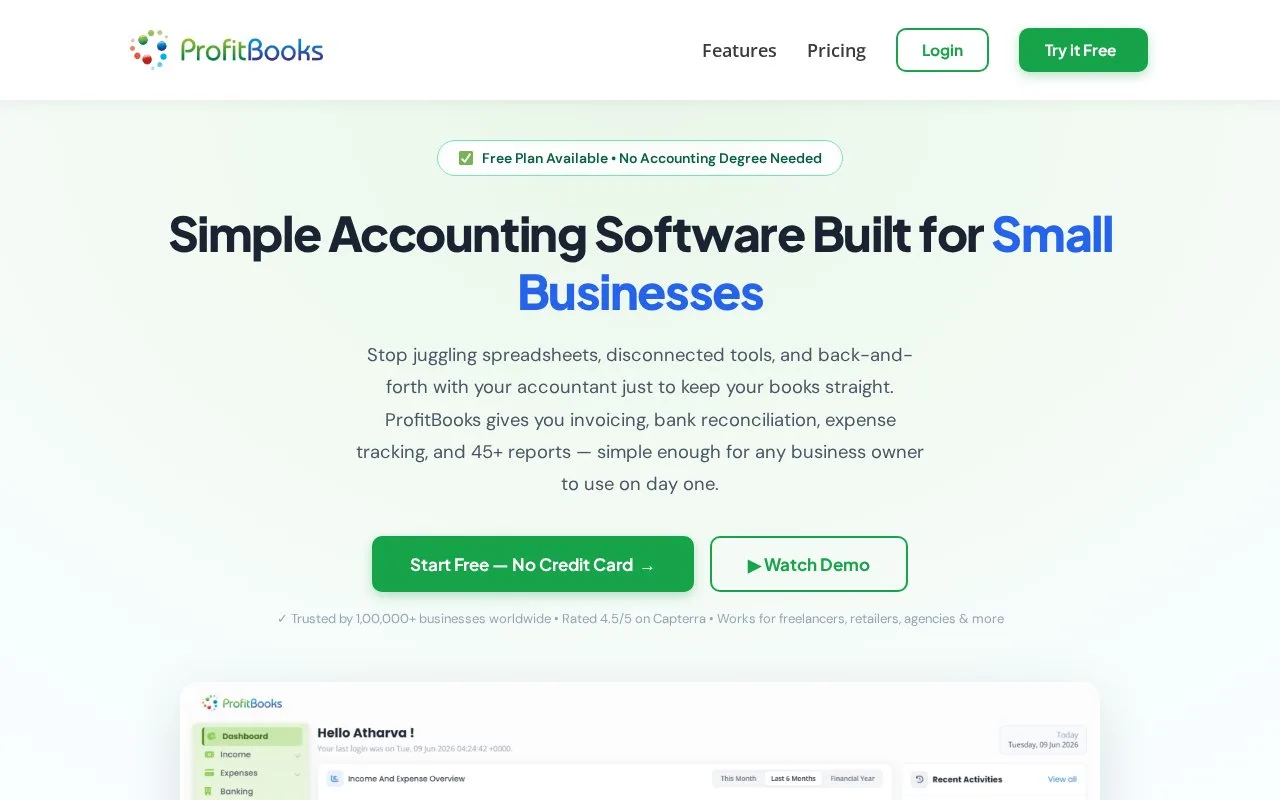
ProfitBooks brings invoicing, expense records, bank reconciliation and financial reports together. Its ongoing free plan is for one user with a small invoice volume. Paid plans raise the limits and add tools such as multiple warehouses, payroll or auditor access.
Bank reconciliation in ProfitBooks provides a check between imported bank activity and the books. Receivables, payables and inventory records sit beside invoices and expenses, so the owner can follow both customer payments and amounts owed to suppliers.
The published US-dollar plans are:
| Plan | Monthly or annual price | Main allowance |
|---|---|---|
| Startup | Free | One user, ten invoices and ten journal vouchers a month, one warehouse |
| Essential | USD 9.95 monthly or USD 99 yearly | One user and 1,000 invoices a year |
| Growth | USD 20 monthly or USD 199 yearly | Ten users, 5,000 invoices a year and three warehouses |
| SMB Pro | USD 35 monthly or USD 349 yearly | 25 users, unlimited invoices and warehouses, custom roles and auditor access |
New accounts start with an SMB Pro trial, then move to Startup if no paid plan is chosen. A credit card is not required to begin. The free plan also limits the customer list to 50.
Read-only accountant access can separate record entry from review, but the pricing comparison places Auditor Access in SMB Pro. Choose roles and the plan together if an external accountant needs their own access. Indian-rupee pricing and GST-related features have a separate regional offer.
Strengths
- Bank reconciliation sits alongside receivables and payables
- A lasting free plan supports a small one-person business
- SMB Pro separates auditor review from editing roles
Watch out for
- Startup permits only ten invoices and ten journal vouchers per month
- The listed Auditor Access feature requires SMB Pro
Best for
- Small businesses maintaining their books with an external reviewer
Sources
- ProfitBooks Accounting Software (Oct 27, 2026)
- ProfitBooks Pricing (Oct 27, 2026)