
What it does
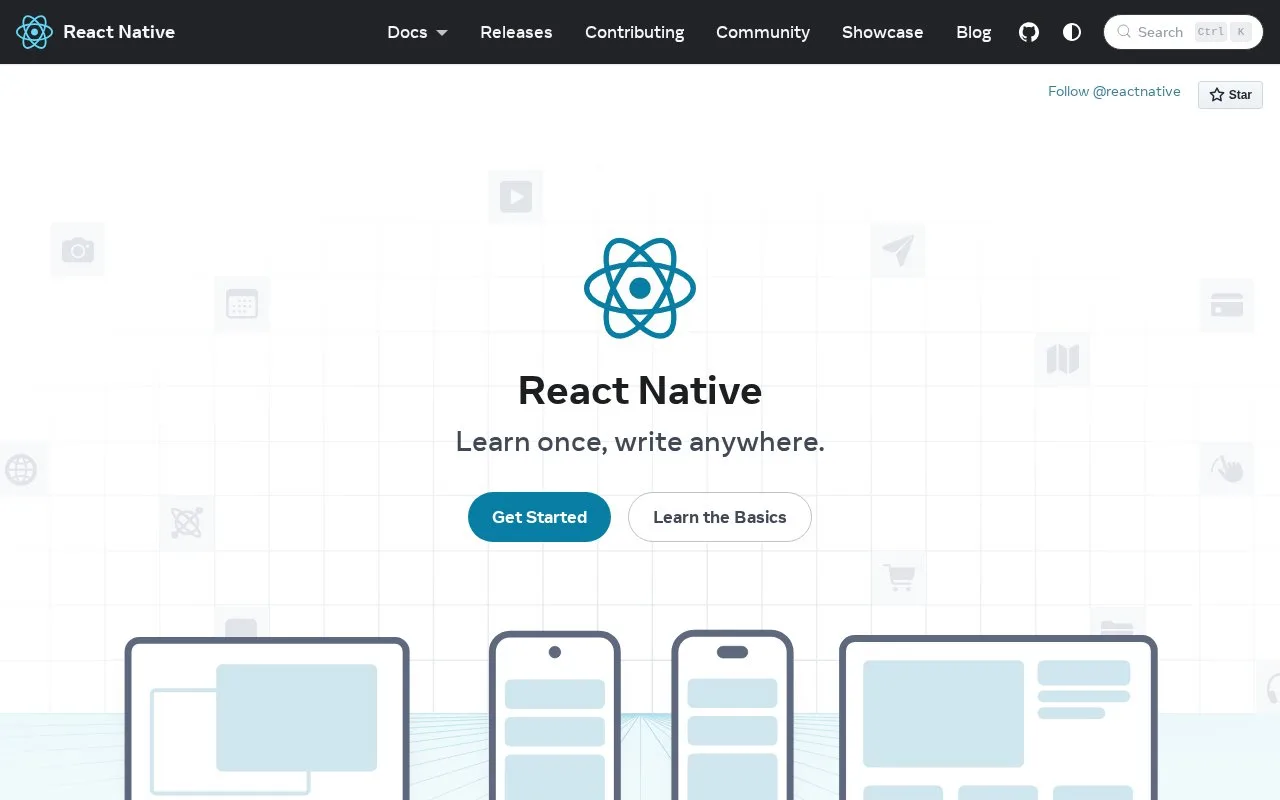
React Native is a framework for building mobile applications with React and JavaScript or TypeScript. Its components render to native platform views, and its documentation recommends using a React Native framework such as Expo for most new applications. The project includes interactive examples for learning the core components; developers still need to choose the app framework and target platforms that fit their project.
The React Native environment guide recommends starting with a framework such as Expo, which supplies additional APIs and project conventions around React Native. For a quick first exercise, the official getting-started docs include interactive examples through Expo's Snack player, where you can try core components in a browser before setting up a local native build. The React Native code and CLI steps are documented workflows, not tests performed for this listing.
Build a small screen with a few core components, then choose whether the full application should use Expo or a framework-less setup. The framework route can handle more of the project setup; the bare route gives a team more direct control over native configuration and requires the corresponding Android or iOS tooling. React Native's model lets a React developer build interfaces that use native platform components, but it is not the same thing as a web page rendered in a mobile browser.
React Native is MIT-licensed. Expo is a related framework often recommended by the React Native docs, not a second name for the React Native project. Evaluate the framework choice and native build requirements before committing to a production workflow.
Strengths
- The official docs include interactive browser examples for learning core components.
- The project can be used through a framework such as Expo or without one.
- The framework supports native application interfaces from JavaScript or TypeScript code.
Watch out for
- A production app still needs a framework decision and platform-specific build setup.
- Framework-less projects require more direct native configuration than the recommended framework path.
Best for
- React developers building mobile applications for more than one platform.
- Teams that want to share application logic while rendering native interface components.
- Projects prepared to select an application framework and maintain the relevant native build toolchains.
Sources
- React Native (Oct 25, 2026)
- React Native Getting Started (Oct 25, 2026)
- Environment setup (Oct 25, 2026)
- facebook/react-native (Oct 25, 2026)
- MIT License (Oct 25, 2026)