
What it does
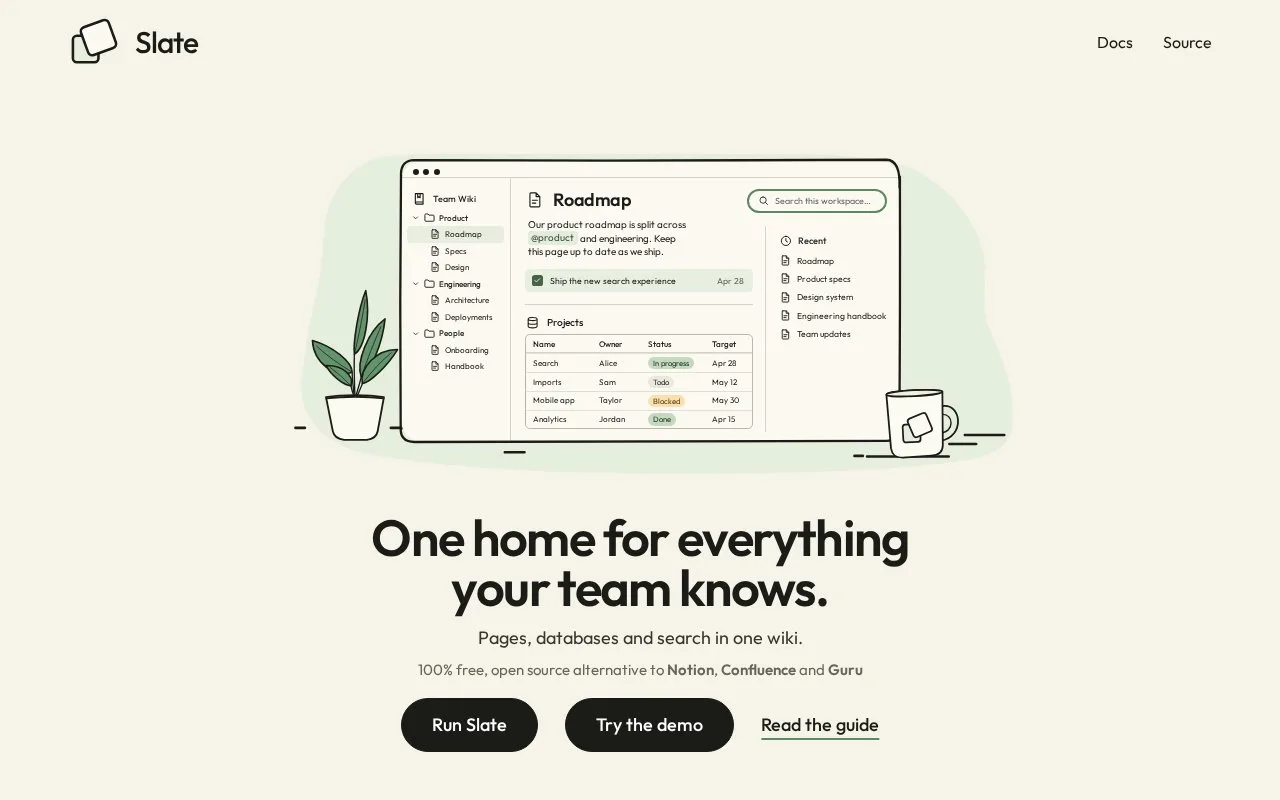
Slate is a self-hosted team wiki with nested pages, databases, search that respects permissions, revision history, publishing, and backup or export tools. Its official site presents sample wiki sections for engineering, product, and people teams, while the linked GitHub repository identifies the project as MIT-licensed. The software is open source and intended to be run by the organization rather than purchased as a managed SaaS plan.
Slate is a team wiki that organizations can host themselves. Its site shows example areas for product, engineering, and people documentation, including architecture, deployments, onboarding, and handbooks. The project materials describe nested pages, database-style organization, search that respects page permissions, revision history, publishing, and backup or export.
The linked source repository uses the MIT license, and the vendor site directs users to run the project themselves. That provides source access and control over hosting, but it also means teams are responsible for setup, backups, and updates. I reviewed the official site and linked repository; I did not install Slate or test authentication and backup behavior.
Strengths
- Nested pages, databases, permission-aware search, history, and export support a structured team wiki.
- The project is MIT-licensed and can be self-hosted without a per-seat SaaS subscription.
Watch out for
- Self-hosting transfers setup, maintenance, and backup responsibility to the adopting team.
Best for
- Technical teams that want to run their wiki on infrastructure they control.
- Organizations that prefer an open-source knowledge base with export and revision history.
Sources
- Slate Team Wiki (Oct 25, 2026)
- just-every/run-slate (Oct 25, 2026)