
What it does
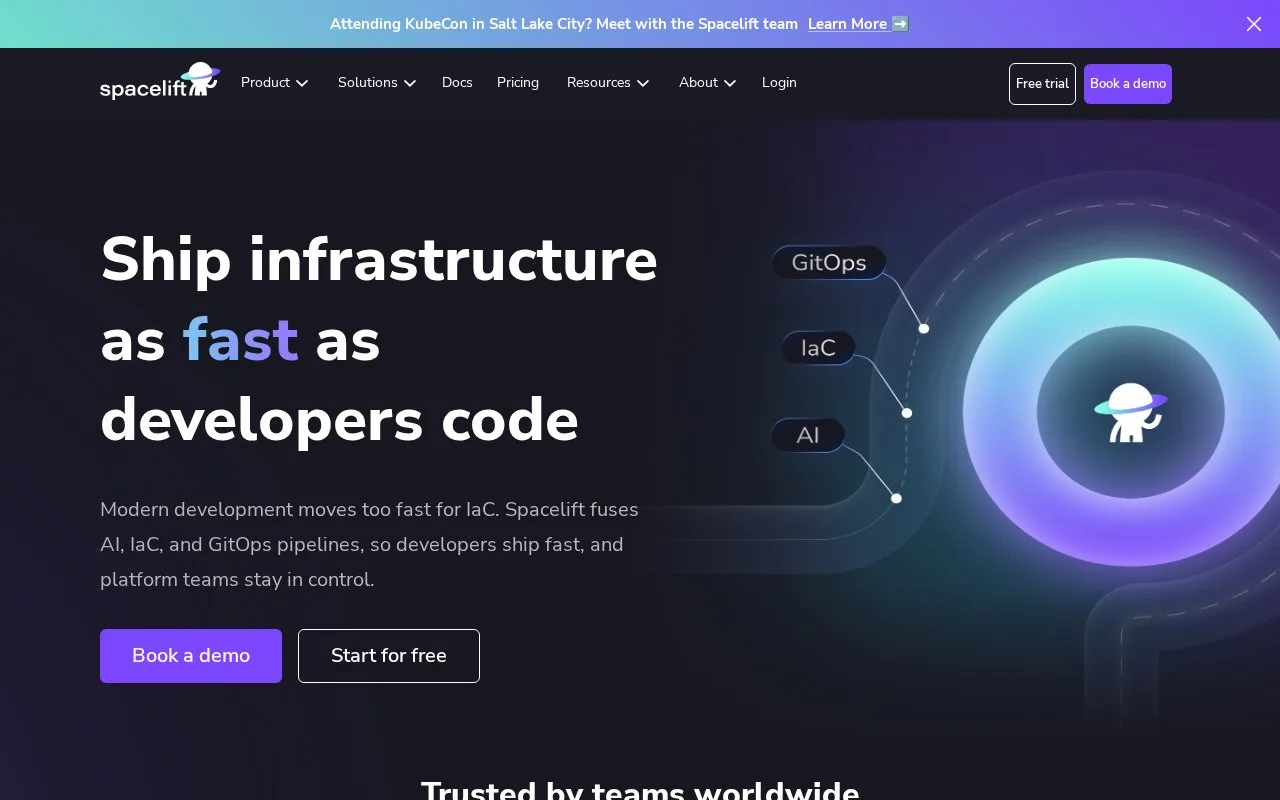
Spacelift is an infrastructure-as-code orchestration platform that connects version-control repositories and cloud accounts to stacks for tools such as Terraform, OpenTofu, Pulumi, Kubernetes, and Ansible. A change can trigger a proposed run that plans and reports what would change; policies and approval settings govern whether infrastructure is applied. It handles infrastructure provisioning and deployment workflows, not just application source builds or unit-test execution.
From a repository change to an infrastructure run
Spacelift's documented workflow starts by connecting source control and a cloud account, then creating a stack for the repository and directory containing its infrastructure code. A push can start a proposed run for a non-tracked branch. That run initializes the stack and plans the change, reports the resource delta, and can evaluate plan policies; it previews changes rather than applying them. A tracked-branch run is the deployment path, with application behavior controlled by the stack's workflow and approval or auto-deploy settings.
This distinction makes Spacelift useful as the orchestration layer for infrastructure changes: it coordinates plans, policy checks, approvals, credentials, and apply behavior around existing IaC tools. Its documented emphasis is infrastructure provisioning and deployment, so teams can keep application compilation and tests in their existing CI workflow and use Spacelift for infrastructure changes.
The public pricing page lists an always-free plan for small teams, followed by paid tiers whose prices are quote-based. A free plan is available without a credit card or time limit according to the pricing page. The breadth of integrations and policy settings is valuable for platform teams, but a useful stack still depends on connecting VCS, cloud credentials, and the chosen IaC configuration.
Strengths
- Proposed runs preview infrastructure changes from branch updates before the tracked deployment path applies them.
- The platform documents policy checks, approval controls, drift detection, stack dependencies, and customizable workflow phases.
- The pricing page lists an always-free option for small teams with no credit card or time limit.
Watch out for
- A practical stack depends on connecting a source-control repository and cloud account and configuring the chosen infrastructure tool.
Best for
- Platform teams coordinating policy-controlled infrastructure plans and deployments across multiple IaC tools.
- Teams that want branch-based infrastructure previews, approval steps, and drift visibility in a shared workflow.
Sources
- The IaC Orchestration Platform Engineers Trust | Spacelift (Oct 25, 2026)
- How It Works | Spacelift (Oct 25, 2026)
- Proposed run (preview) - Spacelift Documentation (Oct 25, 2026)
- Plans and Pricing | Free plan | Spacelift (Oct 25, 2026)