
What it does
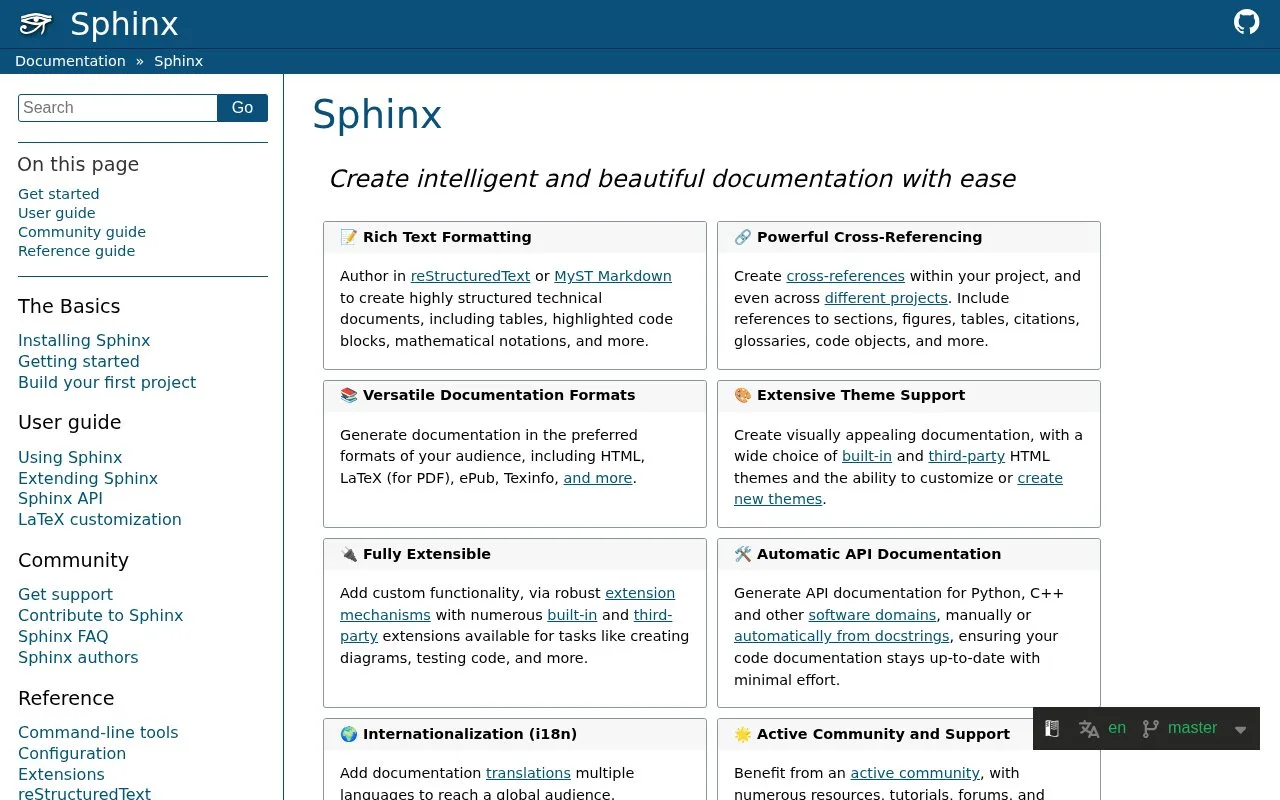
Sphinx is a documentation generator with official guides for installation, authoring, configuration, extensions, and its API. The project presents it as a way to create technical documentation and supports reStructuredText as a core authoring format, with a command-line tool and extension ecosystem for building output.
Build a documentation project from source
A Python project can start with a Sphinx documentation directory, write guides in reStructuredText, and use the getting-started material to configure a build. The official site separates the user guide, command-line reference, configuration options, and extensions, so authors can begin with pages and add specialized output or integrations only when needed.
Sphinx is a developer-oriented generator, not a hosted collaborative editor. A team should plan how it will review source changes and publish builds, especially if writers do not routinely work with command-line tools. The project documentation was read; no installation, extension, or output format was tested.
Strengths
- The official documentation covers authoring, command-line use, configuration, and extensions.
- An extension model allows teams to add capabilities to a documentation build.
Watch out for
- A team must manage the source project and build process rather than edit pages in a hosted wiki.
Best for
- Software teams generating technical manuals from maintained source documentation
Sources
- Sphinx — Sphinx documentation (Oct 25, 2026)