
What it does
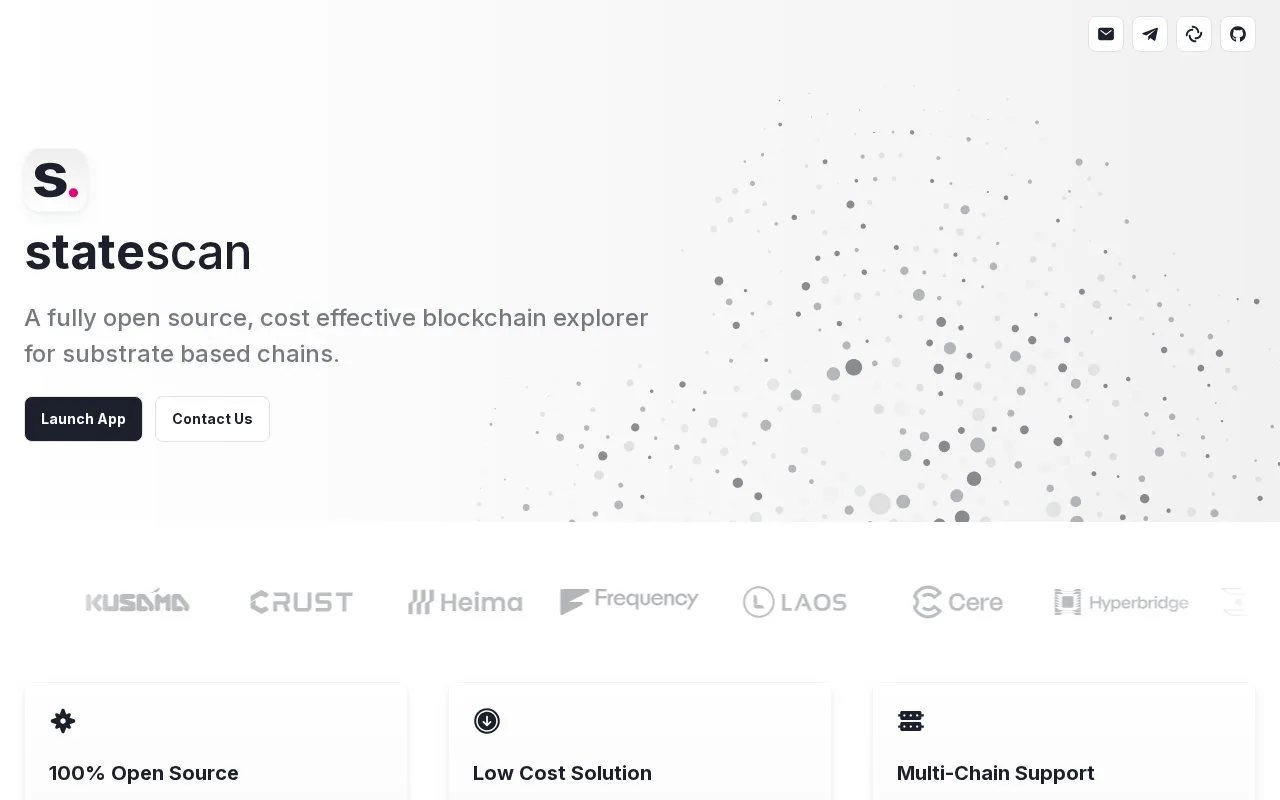
Statescan explores supported Substrate chains through transaction records and specialized account views. Its Apache 2.0 code is available for teams building their own explorer, with separate indexing, API and website components.
Statescan goes beyond ordinary transfers. A multisignature view follows the approval process for an action that needs several signers; proxy views expose delegated account relationships. Vesting timelines show when locked allocations are due for release. Choose the relevant chain and subject when investigating why an account can act or spend, rather than assuming every balance change is a payment.
Identity registrations and verifications have their own views. These describe records on the selected chain; they do not establish that every identity claim is trustworthy.
Running an explorer for your chain
The current v2 project divides the job into modular indexers, API servers and a frontend. Its setup starts with MongoDB, followed by the required indexers. Once those have populated the database, the REST and GraphQL servers can expose the results to the website. Starting the interface alone does not supply chain history.
The modules cover blocks, transactions, events and transfers, with optional indexing for specialized functions such as recovery, assets and multisignature operations. Select the components needed for the chain rather than treating every module as mandatory. The project describes REST access as a migration path toward GraphQL, so integrations should follow the interfaces provided by the version being deployed.
Strengths
- Identity registrations and verifications are grouped into dedicated views
- Indexing modules can be selected for the chain’s supported functions
- Runtime-history records add context to changes in chain behavior
Watch out for
- A self-hosted installation needs a populated database and working API services
- Module coverage must match the functions available on the selected chain
Best for
- Substrate users investigating approvals, delegated authority or locked balances
- Chain teams assembling a modular explorer
Sources
- Statescan supported chains and specialized account views (Oct 27, 2026)
- Statescan v2 modular indexing, API servers and frontend setup (Oct 27, 2026)
- Statescan v2 package manifest declaring the Apache 2.0 license (Oct 27, 2026)