
What it does
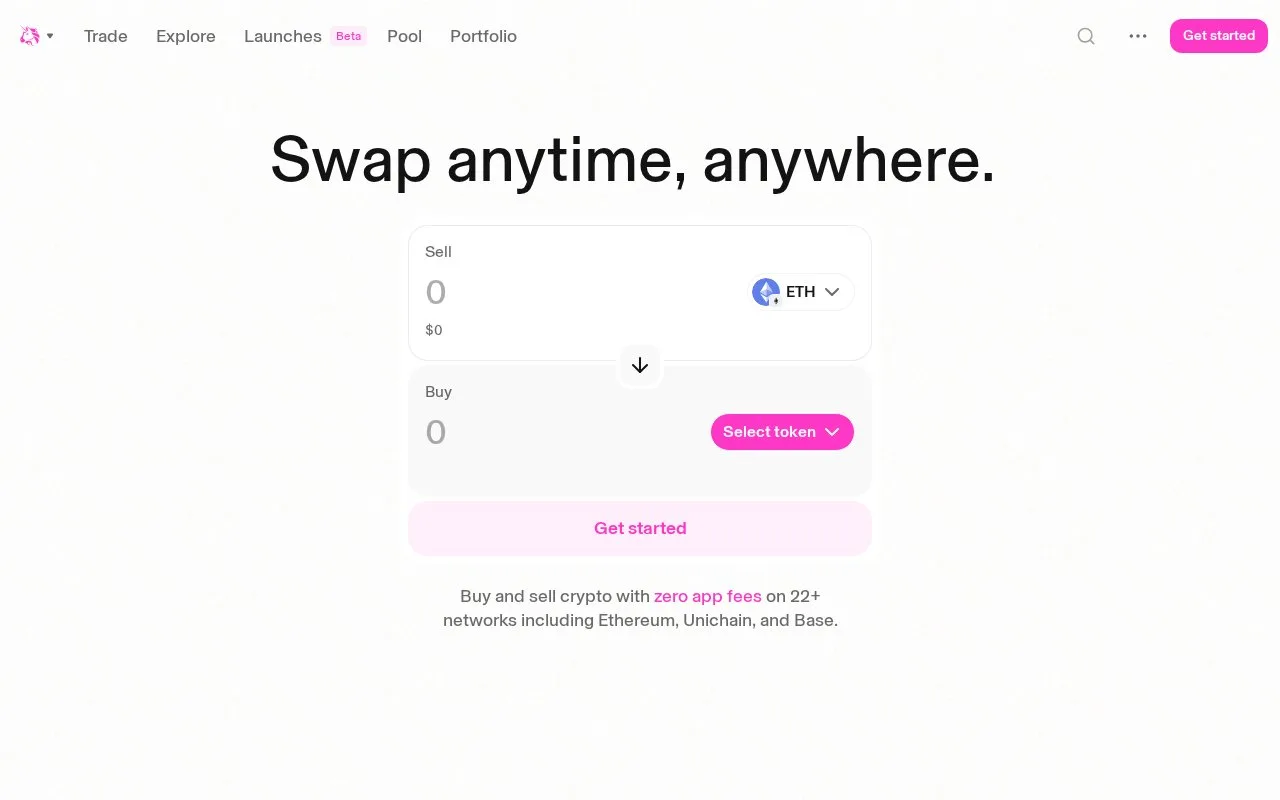
Uniswap provides wallet-based token swaps through liquidity pools on public blockchains. Its web app connects to a wallet you control, and liquidity providers can supply assets to pools with different fee structures. Network costs and pool fees apply even though the Labs interface fee is zero.
A swap starts with your wallet
Connect a compatible wallet, select the token to send and the token to receive, then enter an amount. The token picker accepts a name or contract address. Check that address carefully when different assets share a name. Choose Swap, inspect the details and select Confirm Swap before completing the wallet prompts.
A first swap of a token can require a separate spending approval, which has a network cost. The swap also needs network funds, so using the entire native-token balance can leave too little for execution. View on Explorer opens the completed transaction record.
Zero interface fee still leaves transaction costs
Uniswap Labs removed its interface fee in December 2025. Pool and network charges remain. For example, v3 pools have 0.01%, 0.05%, 0.3% and 1% fee tiers; v4 permits a wider range. Inspect the quote for the actual route.
Liquidity providers receive pool fees but take exposure to changing asset prices and smart contracts. The web interface is separate from the underlying protocol, and Labs cannot recover a wallet or move its funds. Interface users must meet the local age of majority and the published sanctions restrictions.
Strengths
- Swaps use a wallet controlled by the visitor
- Token search accepts a contract address
- Swap details separate transaction costs from the interface fee
Watch out for
- Token approval can add a separate network transaction
- Wallet recovery and signing decisions remain the user's responsibility
- Pool version and route affect trading costs
Best for
- Wallet owners who understand token addresses and want on-chain swaps
Sources
- Uniswap web swap instructions (Oct 27, 2026)
- Uniswap Labs interface fees (Oct 27, 2026)
- Uniswap pool fees by protocol version (Oct 27, 2026)
- Uniswap Labs interface and eligibility terms (Oct 27, 2026)