
What it does
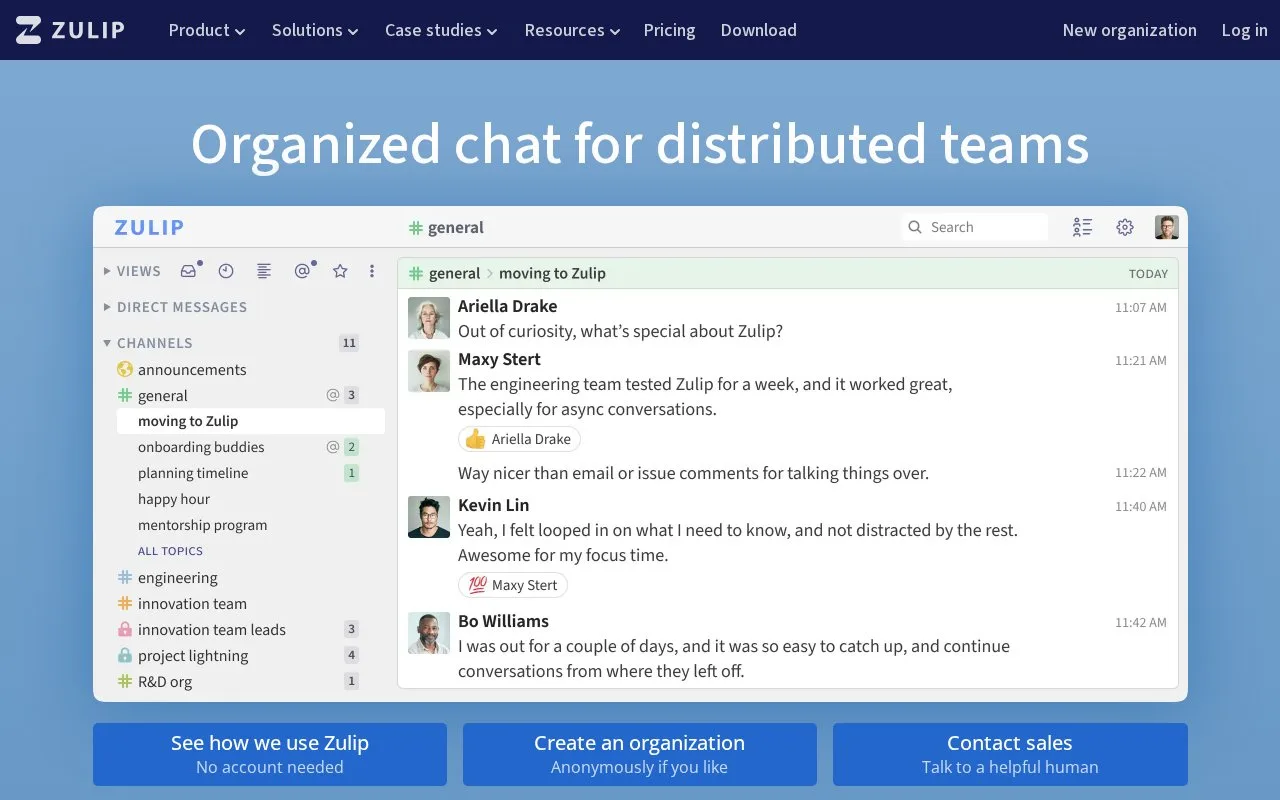
Zulip organizes messages into channels and topic-labeled conversations. Several discussions can continue in one channel without being mixed into a single scrolling chat, which helps distributed teams return to an exchange later. Zulip offers a hosted cloud service and self-hosted editions, with desktop and mobile clients listed in its plans.
Make each discussion findable
A team planning a release could create a channel for the release and give separate topics to testing, documentation, and launch timing. Zulip’s topic guide explains that each conversation has its own label and can continue over hours or days; readers can follow only the topics they need. The plans page also lists search, integrations, file sharing, and lightweight project aids such as marking topics resolved.
The Free cloud tier includes search over 10,000 messages and up to 5 GB of file storage. If the team needs a longer searchable history or more storage, compare the paid cloud plans. Self-hosting is another path, but it transfers server setup and maintenance to the organization. No live workspace or server was configured for this listing.
Strengths
- Topic-based threads keep multiple conversations within a channel separately labeled.
- The hosted service has a free tier, while self-hosting is documented as another deployment option.
- Plans list web, desktop, mobile, and terminal clients.
Watch out for
- The Free cloud plan limits searchable history to 10,000 messages and file storage to 5 GB total.
- A self-hosted installation requires the organization to operate its own server.
Best for
- Distributed teams that need to follow several asynchronous discussions in one channel
- Open-source communities or organizations choosing between hosted chat and self-hosting
Sources
- Zulip — organized team chat (Oct 25, 2026)
- Introduction to topics | Zulip help center (Oct 25, 2026)
- Plans and pricing | Zulip (Oct 25, 2026)